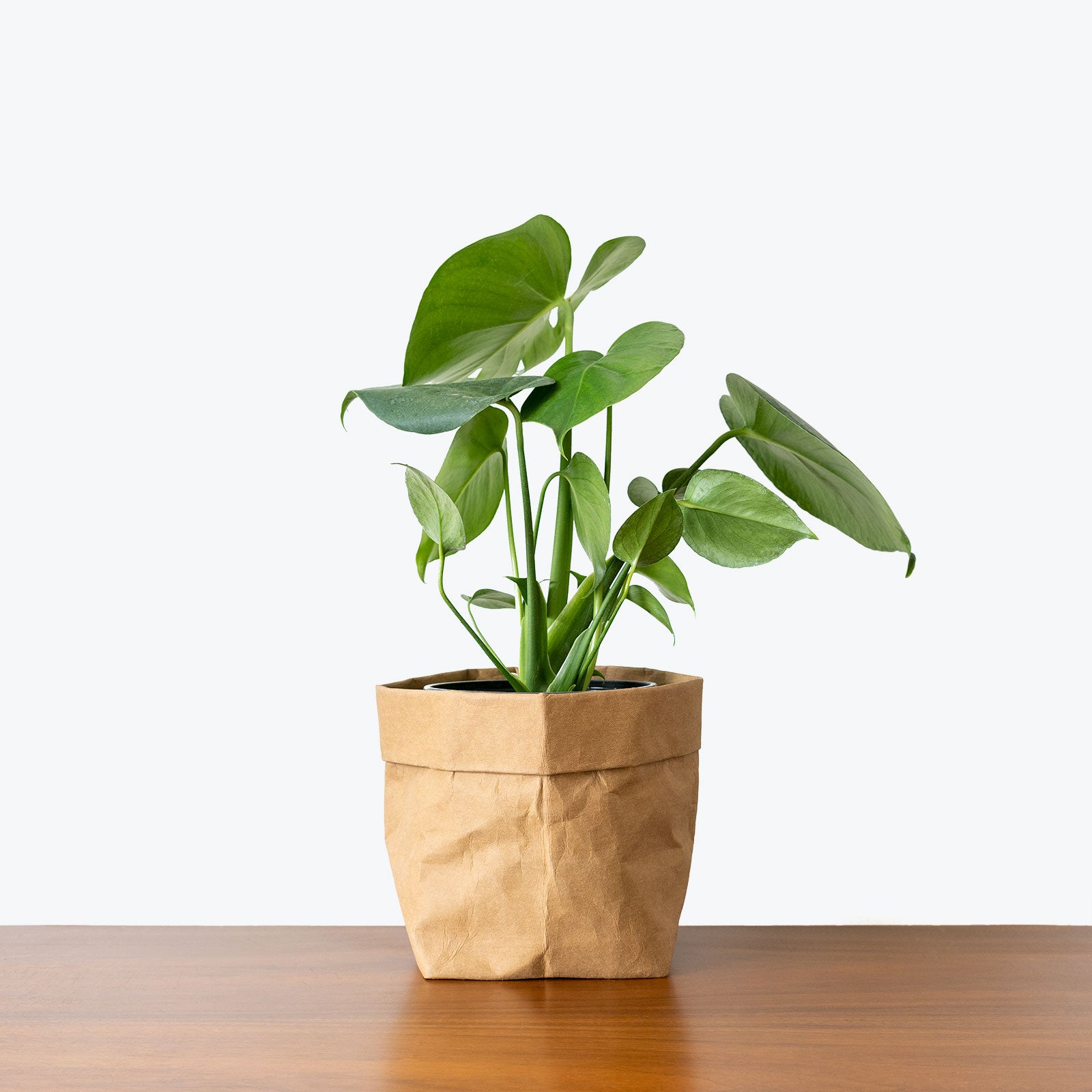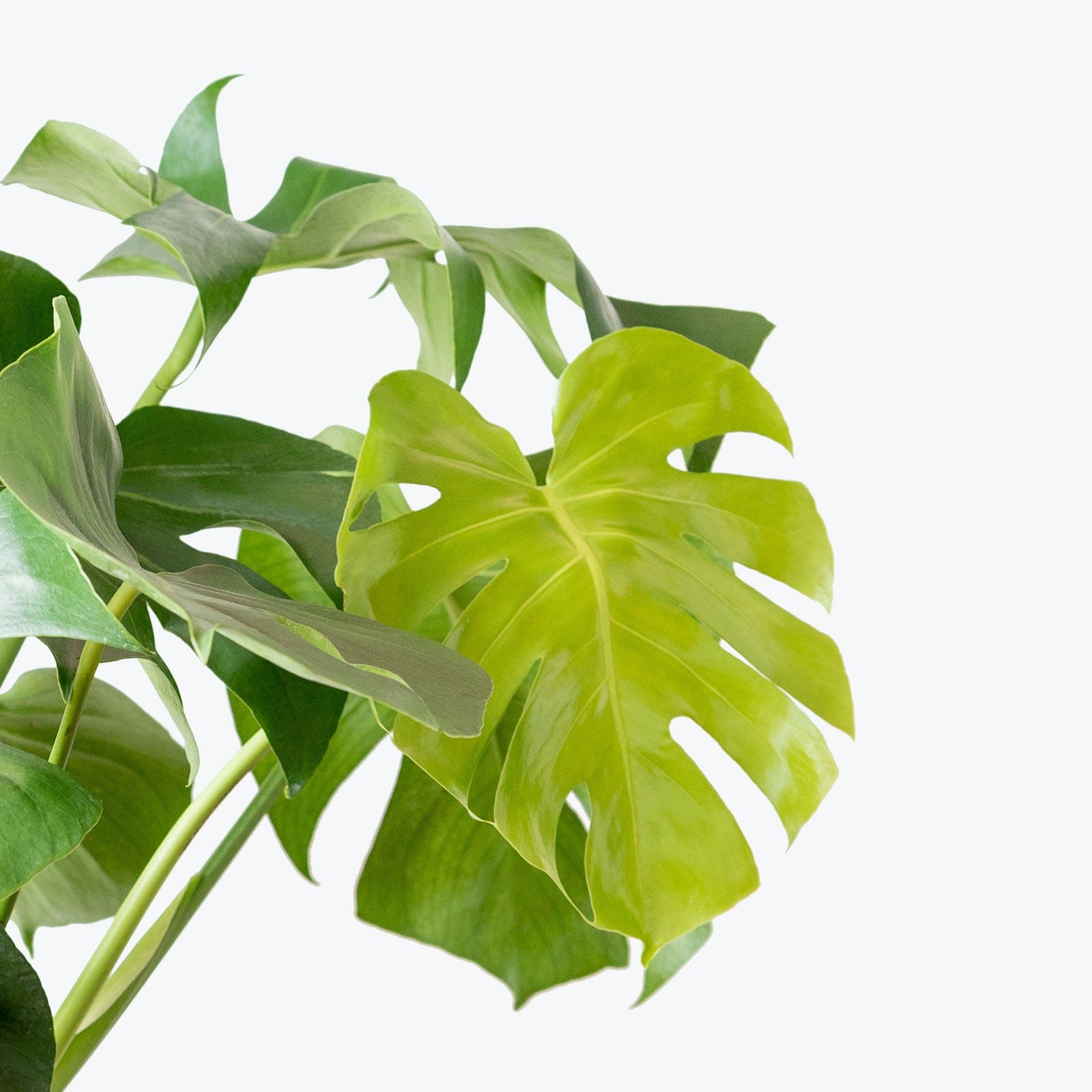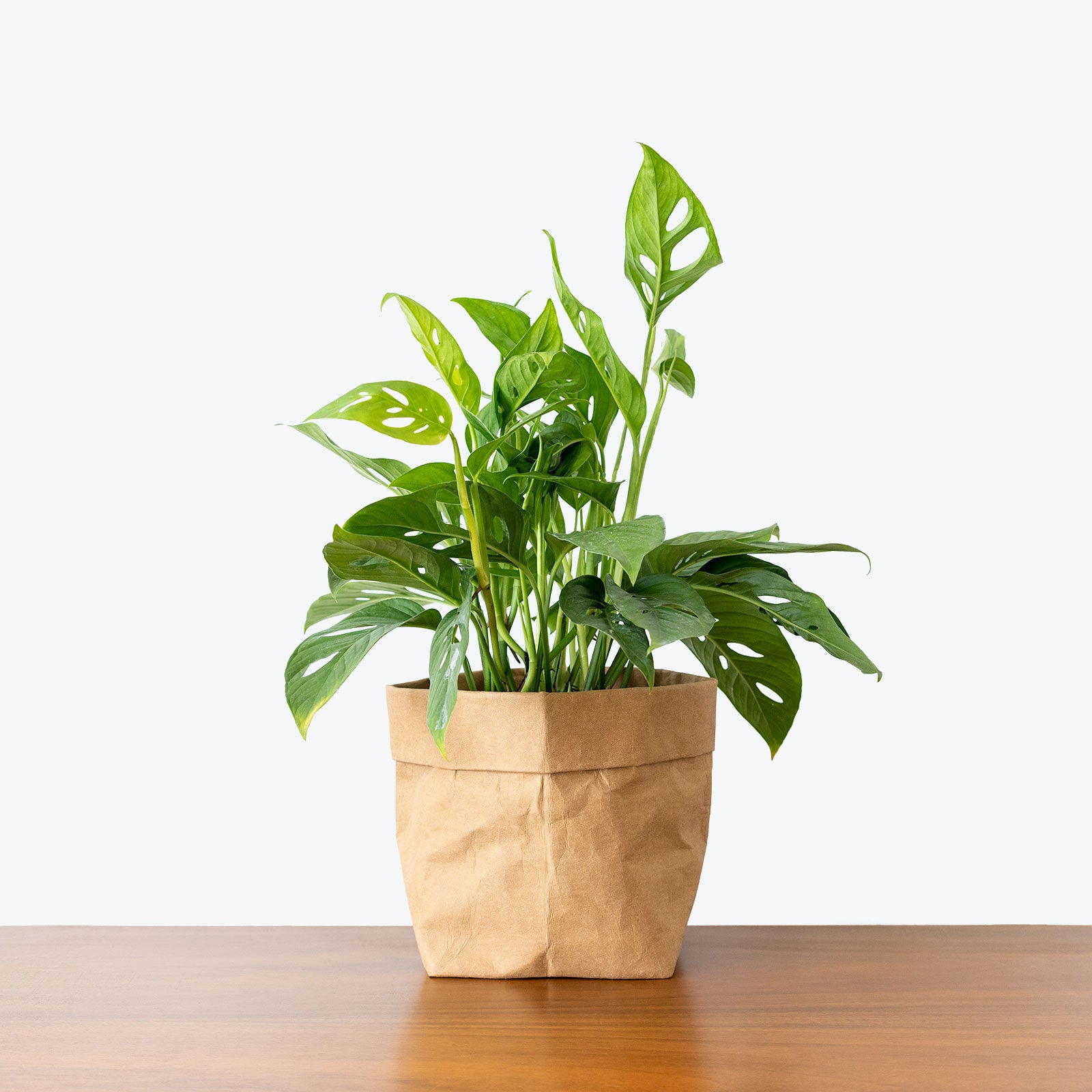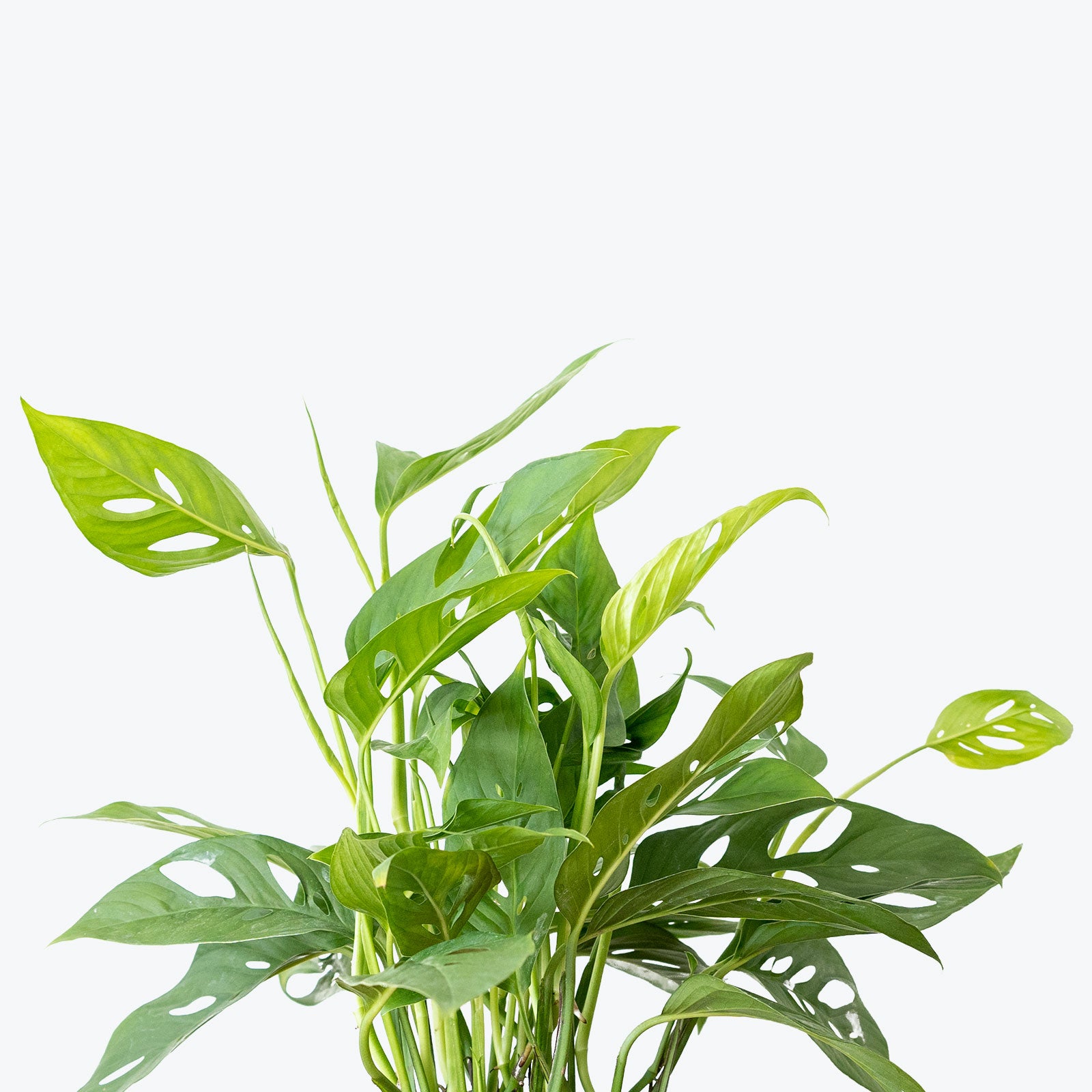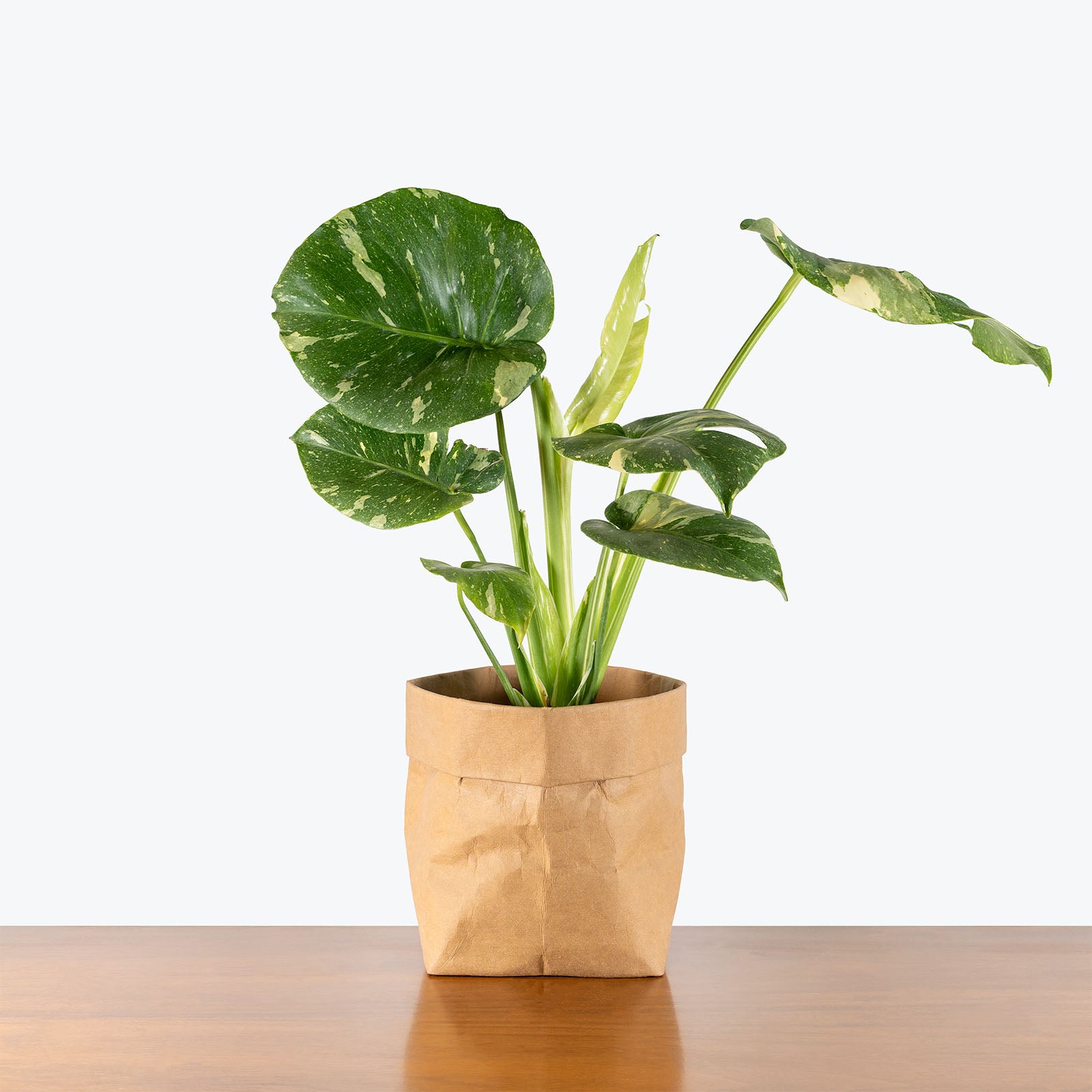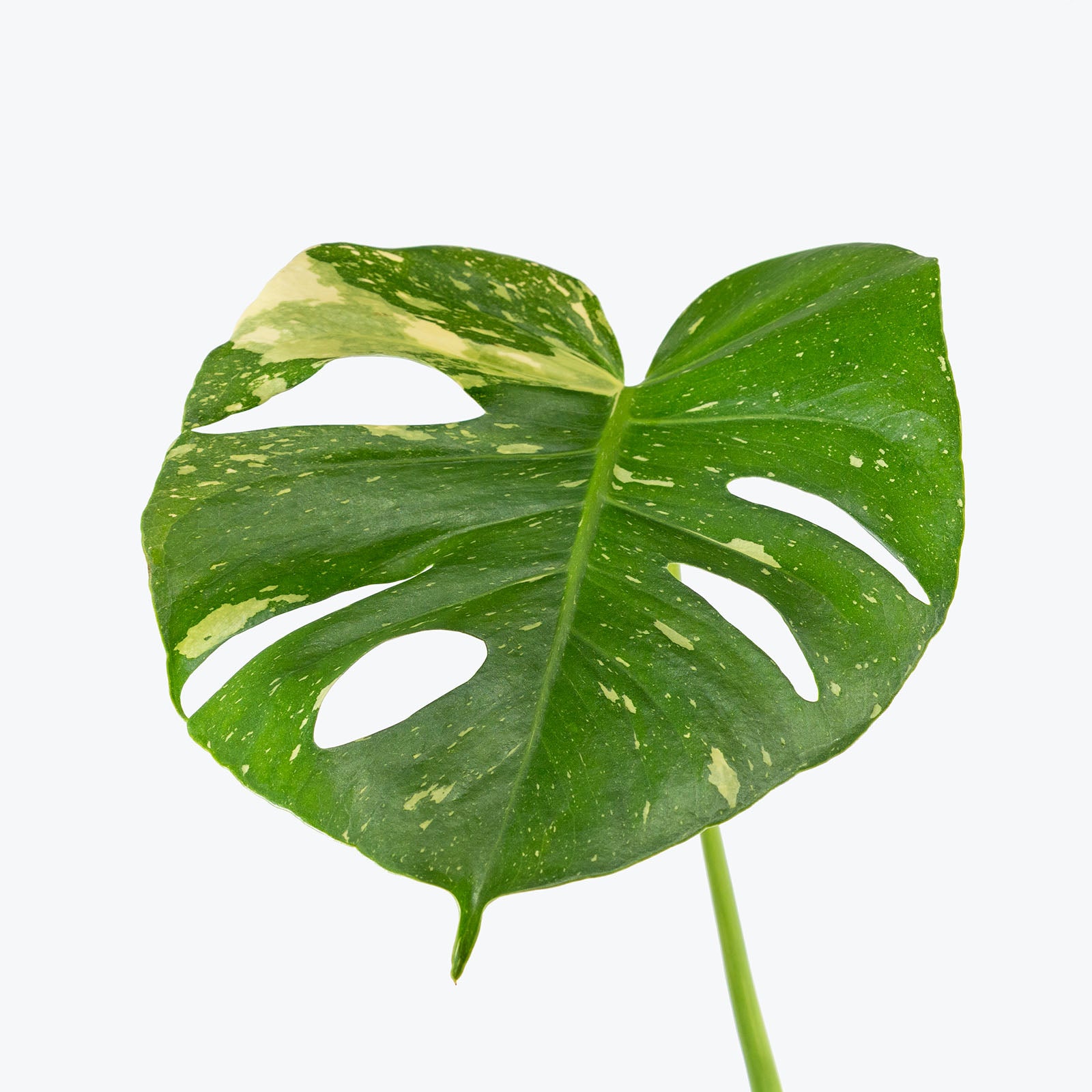
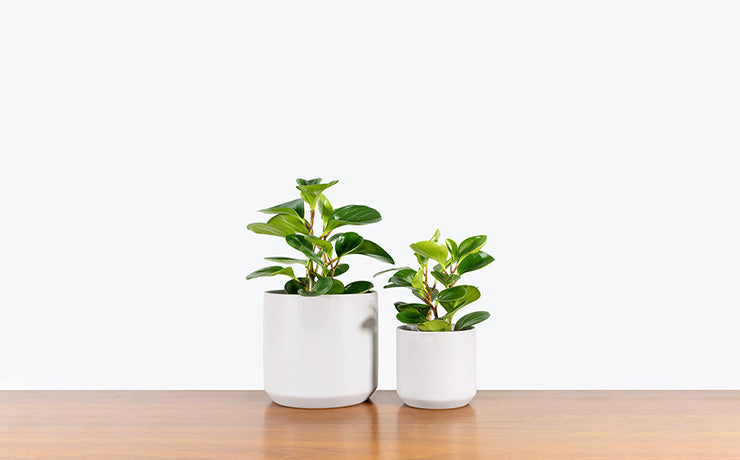
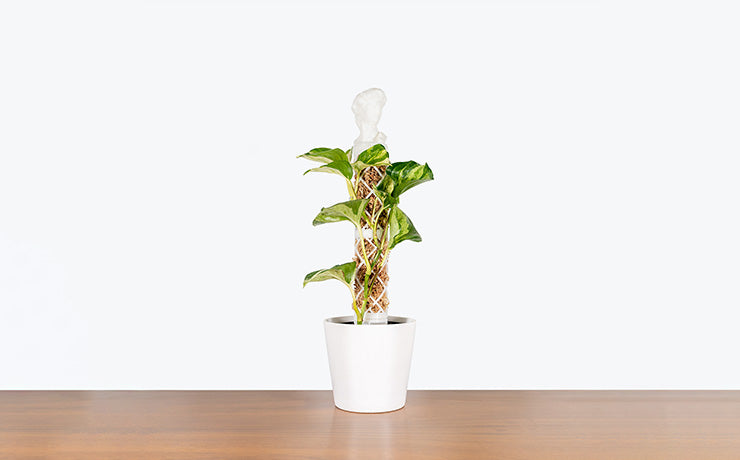
Monstera are tropical climbing houseplants grown for their distinctive foliage. Monstera Deliciosa develops large, split leaves as it matures; Adansonii has smaller, perforated leaves on climbing or trailing stems. Thai Constellation adds cream-coloured variegation, while Peru offers textured green leaves.
Choose for the space the plant can grow into as well as its appearance today. Compare the selected size, light requirements and whether you want a supported climber or a trailing display. Our individual care guides help you match each variety to your home.
Which Monstera suits a small space or a larger room?
For a shelf or hanging display, compare Monstera Adansonii: its smaller, perforated leaves grow on stems that can trail or climb. It still needs room for lengthening vines. For broad statement foliage with room to spread, choose Monstera Deliciosa. Thai Constellation is a cream-variegated form of Deliciosa, so plan for a substantial plant rather than treating a small starter pot as a compact variety.
Compare the selected plant size with the space beside your window, leaving room for foliage and any climbing support. Pot diameter describes the container, not the width of the mature plant.
Can a Monstera grow in low light?
Our Deliciosa, Adansonii and Thai Constellation care guides specify medium to bright indirect light; Monstera Peru is listed for medium indirect light. A dark corner is not an ideal placement. Check daylight where the foliage will sit and use the individual variety’s requirements when comparing plants.
Does a Monstera need a moss pole?
A climbing Monstera benefits from a pole or other suitable support as it gets larger. Plan space for both the support and the leaves extending around it. Adansonii can also trail from a shelf or hanging planter if you prefer cascading stems.
Check the selected product option to see whether support is included. A pole helps you arrange climbing growth; it does not replace suitable light or make a large-leaved variety stay small.
Why do some Monstera plants have leaves without splits or holes?
Leaf shape depends on the species and the plant’s maturity. Young Deliciosa plants can have unsplit leaves, while Monstera Peru is grown for its textured leaves rather than holes. Choose the variety and size you like now; mature leaf shape develops over time and depends on suitable growing conditions.
Are Monstera plants pet friendly?
No. Our Monstera care guides mark these plants Pet Caution. The ASPCA lists Monstera deliciosa as toxic to cats and dogs. If pets are likely to chew foliage, browse our Pet Friendly collection instead. Contact your veterinarian promptly if you suspect ingestion.
How often should I water a Monstera?
Our Deliciosa, Adansonii, Thai Constellation and Peru care guides recommend watering when the soil is mostly dry. Check the potting mix rather than following a fixed weekly schedule; light, pot size and season affect how quickly it dries. Water thoroughly when needed, allow excess water to drain and empty any water collected in the cover pot.
If you’re unhappy with your plants for any reason, contact us within 15 days, we'll sort it out for you. 30 days for accessories.
Lifetime Support
If you have questions about your plant at any point or are just not sure if it is doing something good or bad, our plant experts are always here for you to guide you in the right direction.
Carbon-Neutral Delivery
Get carbon-neutral delivery across Canada, and enjoy free local delivery* to have your plants delivered by one of our friendly team members in Toronto and cities around Toronto.
Packed with Care
Plastic negative, and eco-friendly packaging, we spend every effort to make sure your plants arrive in their best condition with minimal environmental impact.
Delivery and shipping
Loading delivery checker…
Delivery checker could not load. Please try again.