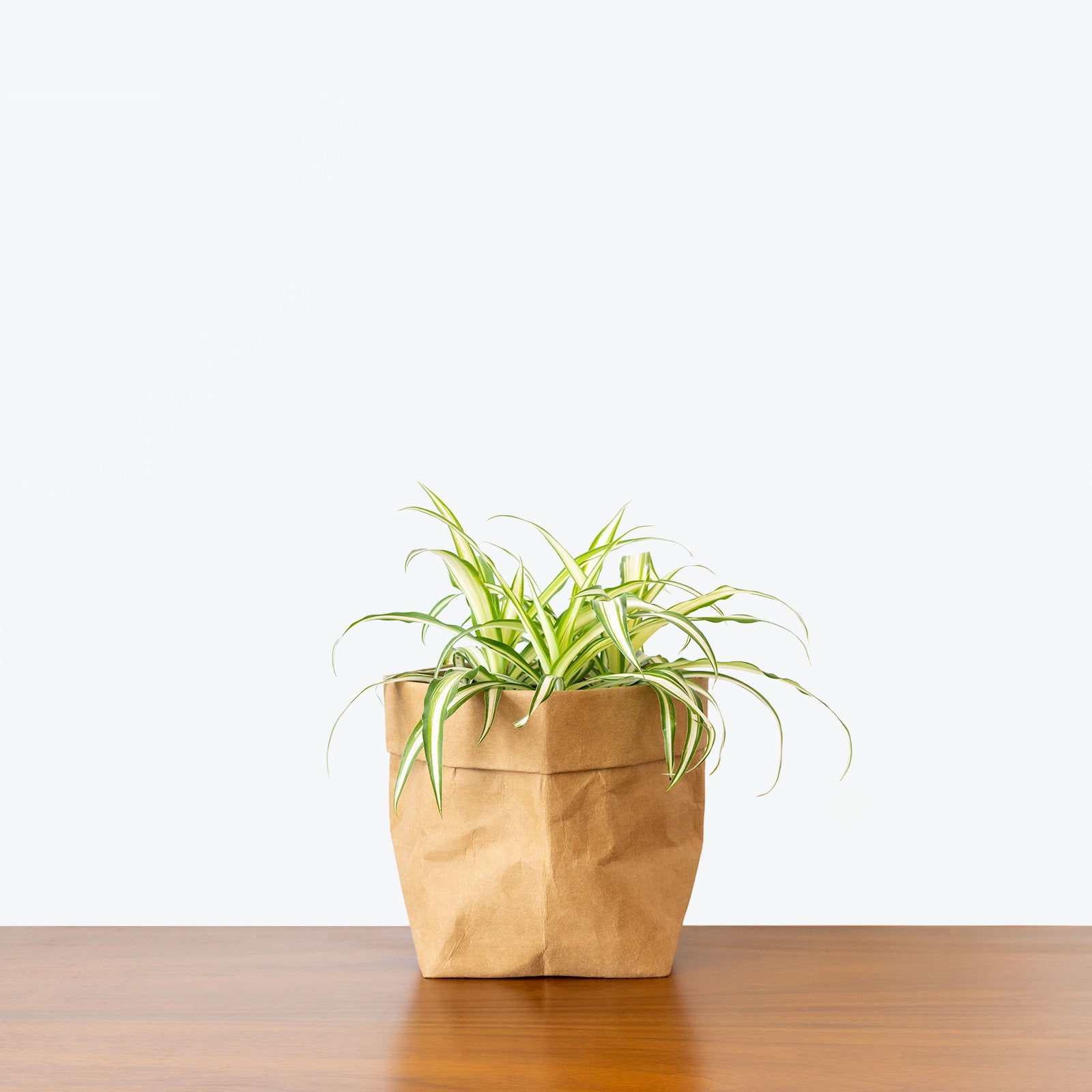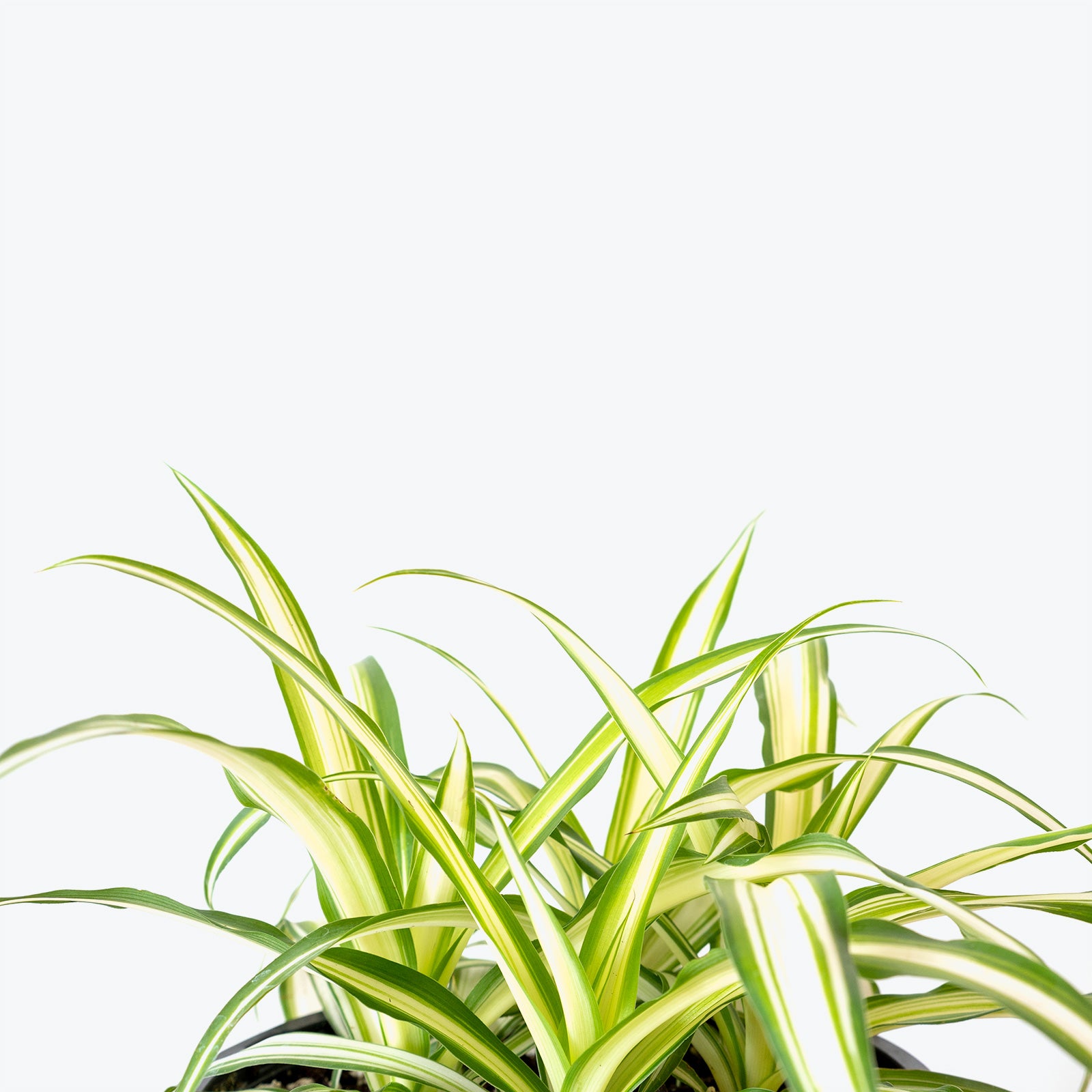
Spider Plants form a fountain of ribbon-like leaves, with mature plants often sending out long stems carrying small plantlets. Choose classic green foliage for a simple look, striped leaves for more contrast, or a Bonnie variety for curls. Their arching shape works well on a shelf or in a hanging display with space for the leaves and plantlets to hang freely.
The Spider Plants in this collection are Chlorophytum comosum varieties, a familiar choice for beginners and pet households. Compare the available sizes as well as the leaf pattern: a smaller plant can grow into its space, while a fuller plant gives a more established display. Bright, indirect light and a pot that drains well provide a good start.
Which Spider Plant should I choose for a shelf or hanging basket?
Allow space around and below the pot for arching leaves and any future plantlets. Compare the actual fullness and selected size, and check whether the pictured basket or decorative planter is included. A shelf can work as well as a hanging display if the foliage has light and the pot is easy to reach.
How much light and water does a Spider Plant need?
Bright, indirect light is ideal, although Spider Plants can adapt to medium light. Protect them from strong direct sun. Let the potting mix dry partly between waterings, then water thoroughly and drain away excess. Check the soil instead of using a fixed weekly schedule, and avoid leaving the roots wet or the whole pot dry for a prolonged period.
Will my Spider Plant have babies?
Mature Spider Plants can produce small plantlets, often called spiderettes, on long arching stems. A young plant may not have them yet, and their appearance depends on maturity and growing conditions, so they are not guaranteed with every plant. To grow another plant, you can root a plantlet in a small pot of damp mix while it is still attached, then separate it once roots are established.
Why do Spider Plants get brown tips?
Brown tips can result from overly dry soil, wet roots, dry air, strong sun or fertilizer and water-mineral buildup. Check those conditions before changing your watering routine. If tap-water sensitivity is contributing, try rainwater or distilled water; leaving water out overnight does not remove fluoride. Existing brown tissue will not turn green again, but you can trim it with clean scissors while improving conditions for new growth.
Are Spider Plants safe for cats and dogs?
The ASPCA lists Chlorophytum comosum as non-toxic to cats and dogs. Still discourage pets from chewing leaves or tugging the dangling plantlets, and secure hanging pots where they cannot be pulled down. For more choices, explore our pet-friendly plants.
If you’re unhappy with your plants for any reason, contact us within 15 days, we'll sort it out for you. 30 days for accessories.
Lifetime Support
If you have questions about your plant at any point or are just not sure if it is doing something good or bad, our plant experts are always here for you to guide you in the right direction.
Carbon-Neutral Delivery
Get carbon-neutral delivery across Canada, and enjoy free local delivery* to have your plants delivered by one of our friendly team members in Toronto and cities around Toronto.
Packed with Care
Plastic negative, and eco-friendly packaging, we spend every effort to make sure your plants arrive in their best condition with minimal environmental impact.
Delivery and shipping
Loading delivery checker…
Delivery checker could not load. Please try again.