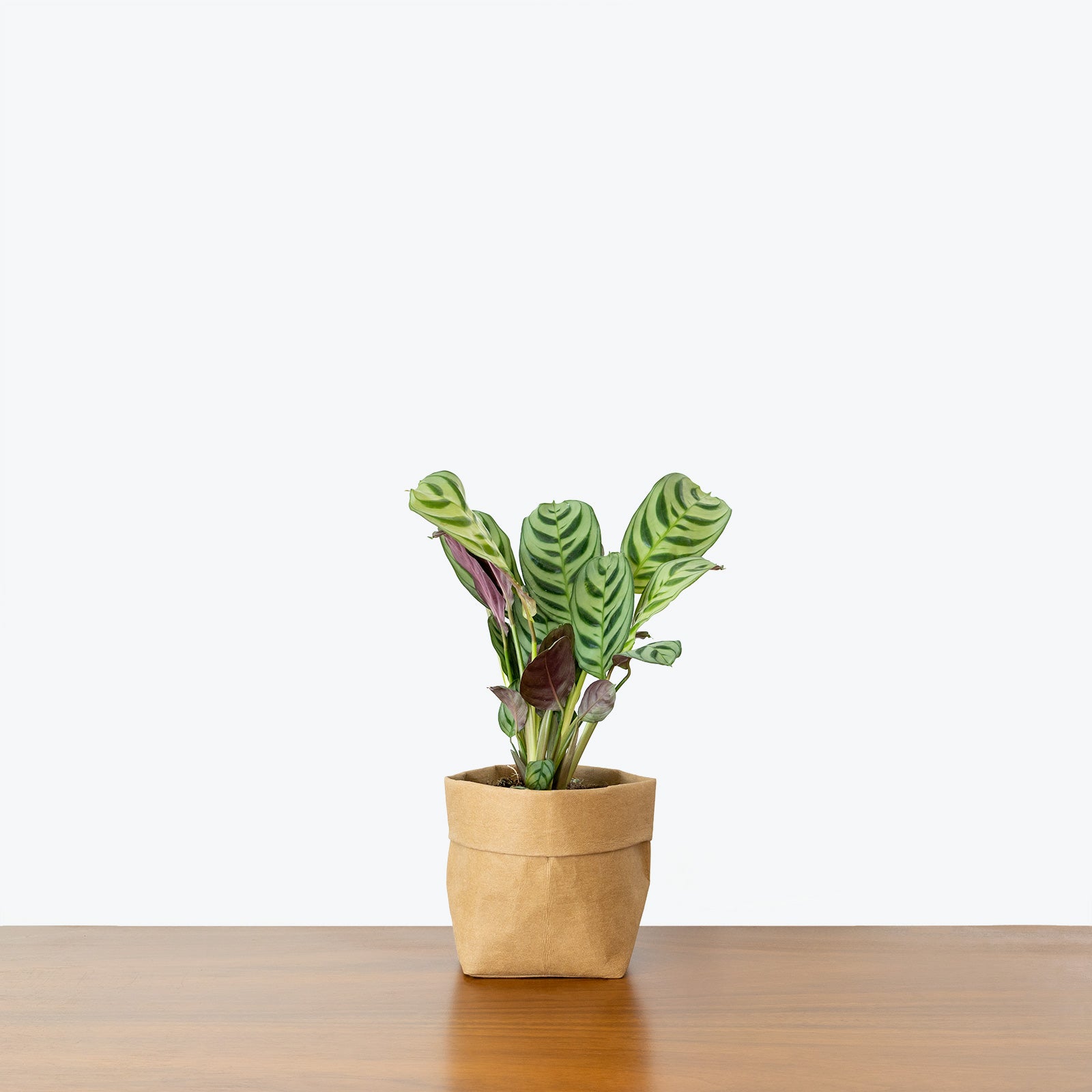

Ctenanthe plants bring striped, silver or golden foliage to a room, with leaves that can lift and fold as day turns to night. These members of the prayer plant family suit a spot with gentle, indirect light and someone who can check soil moisture regularly.
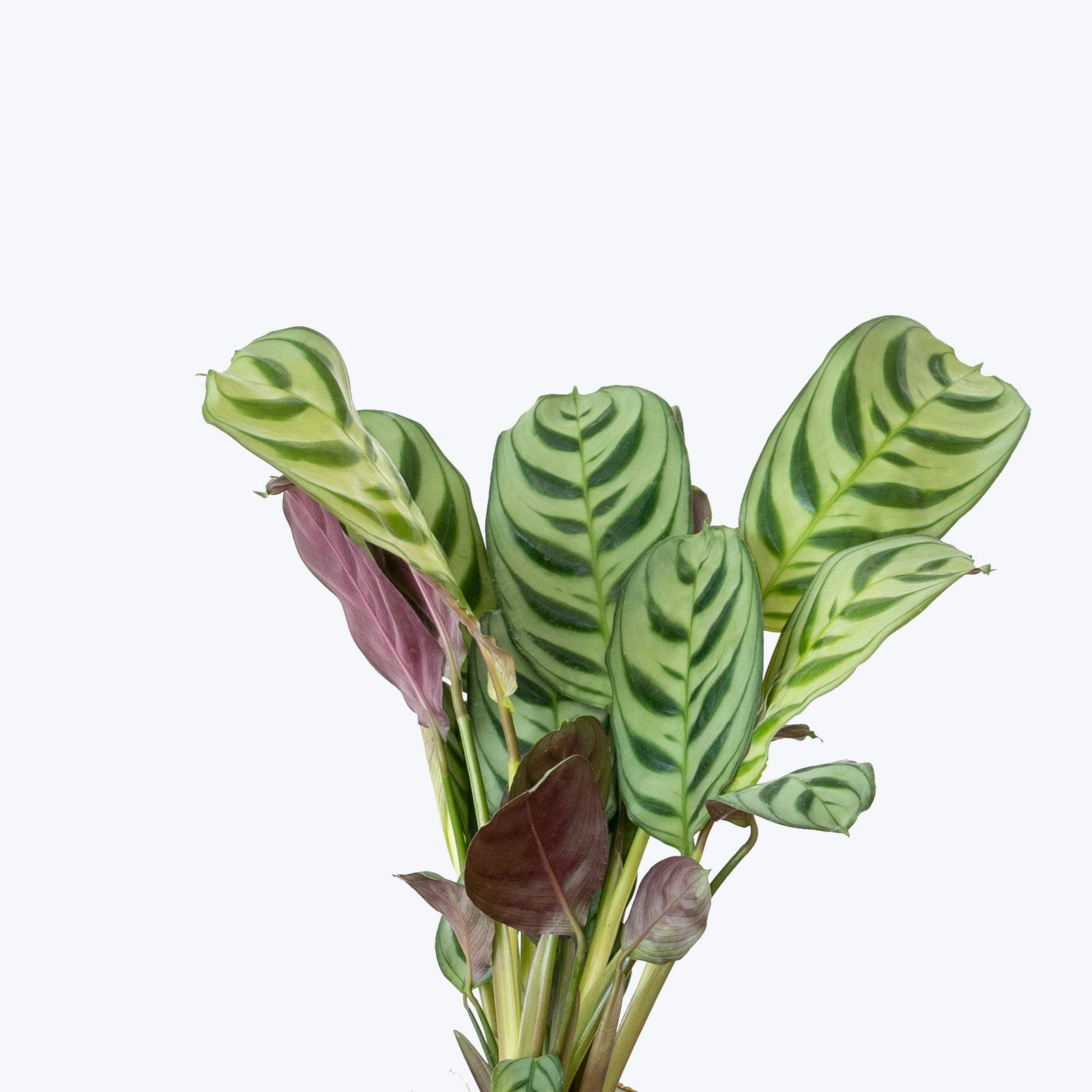
Choose by leaf pattern and the space you have: Burle-Marxii offers a fishbone pattern, Grey Star has long silver leaves, and Lubbersiana brings splashes of yellow and green. Compare the pot size and plant dimensions on each listing, then leave room for the foliage to spread.
Which Ctenanthe should I choose?
For a bold fishbone pattern, compare Ctenanthe Burle-Marxii. Grey Star offers elongated silver foliage with darker veins. Choose Lubbersiana for golden markings and branching, bamboo-like stems, or Oppenheimiana Tricolor for cream-and-green leaves with touches of pink. Check the selected size rather than judging the space needed from the variety name alone.
Is Ctenanthe the same as Calathea or Maranta?
They are related members of the prayer plant family, but they are different plant groups. Shared common names can make shopping confusing. Ctenanthe leaves may change position through the day and fold upward at night; that regular movement is normal. Use the individual listing to identify the plant and follow its care guidance. Compare our Calathea and Maranta collections for other leaf shapes and growth habits.
How much light does Ctenanthe need?
Choose bright, indirect light, such as a spot near a window with harsh sunlight softened by a sheer curtain. Strong direct sun can damage the foliage. A dim corner may support less growth and less distinct colouring, so choose a brighter position if you want the patterned leaves to look their best.
How should I water a Ctenanthe?
Check the soil regularly and water when the surface begins to dry, keeping the root zone lightly moist rather than letting the whole pot dry out. Water thoroughly and allow excess water to drain away. Adjust to the pot, light and season instead of following a fixed weekly schedule. If leaf edges brown despite suitable moisture and light, consider water quality; rainwater or distilled water can help where tap water contains troublesome mineral salts.
Are Ctenanthe plants pet friendly?
Ctenanthe is generally considered non-toxic to cats and dogs, making it an option for a home with pets. Keep leaves out of chewing reach anyway: non-toxic does not mean intended to be eaten. Check the identity of the specific plant, especially when shopping under shared names such as prayer plant.
If you’re unhappy with your plants for any reason, contact us within 15 days, we'll sort it out for you. 30 days for accessories.
Lifetime Support
If you have questions about your plant at any point or are just not sure if it is doing something good or bad, our plant experts are always here for you to guide you in the right direction.
Carbon-Neutral Delivery
Get carbon-neutral delivery across Canada, and enjoy free local delivery* to have your plants delivered by one of our friendly team members in Toronto and cities around Toronto.
Packed with Care
Plastic negative, and eco-friendly packaging, we spend every effort to make sure your plants arrive in their best condition with minimal environmental impact.
Delivery and shipping
Loading delivery checker…
Delivery checker could not load. Please try again.