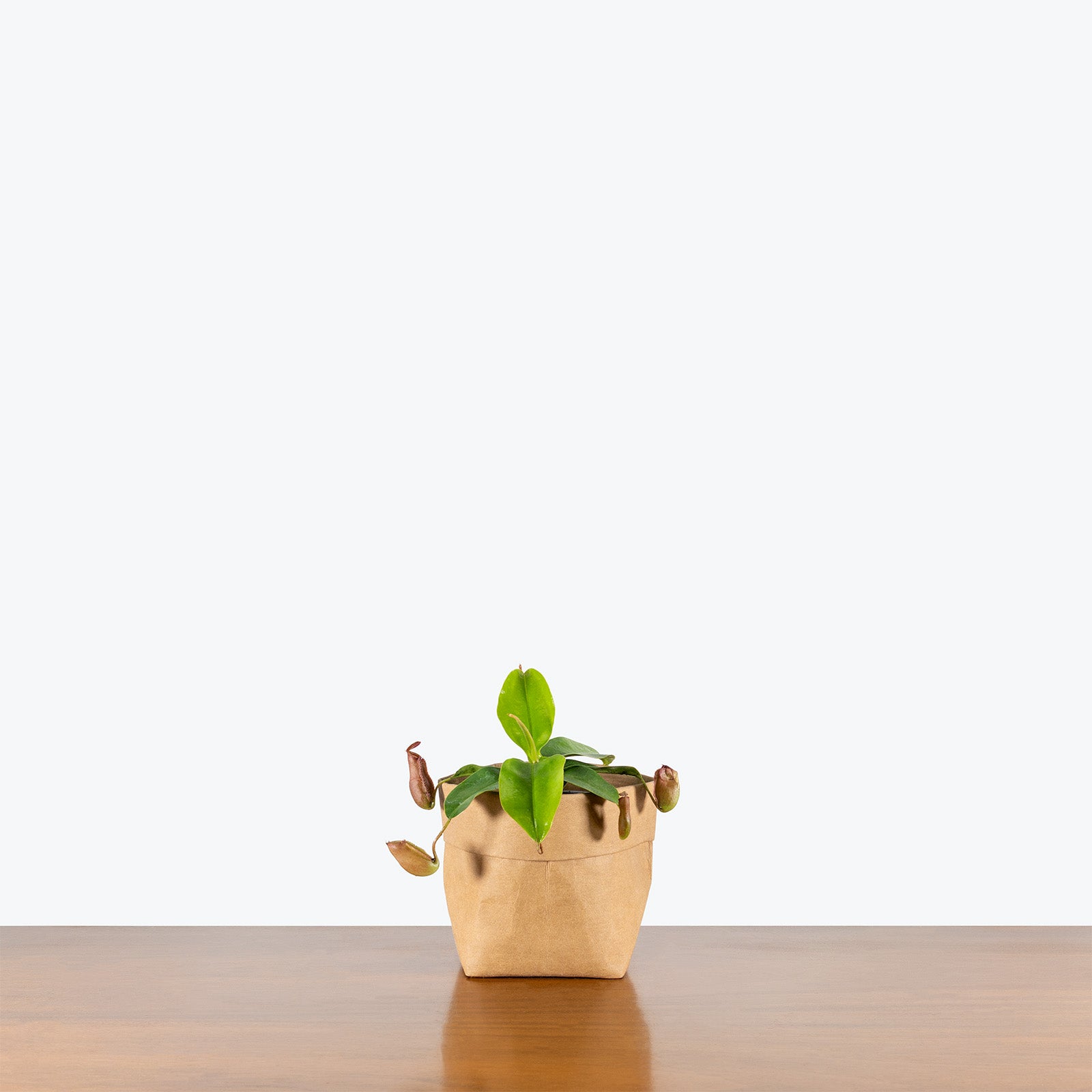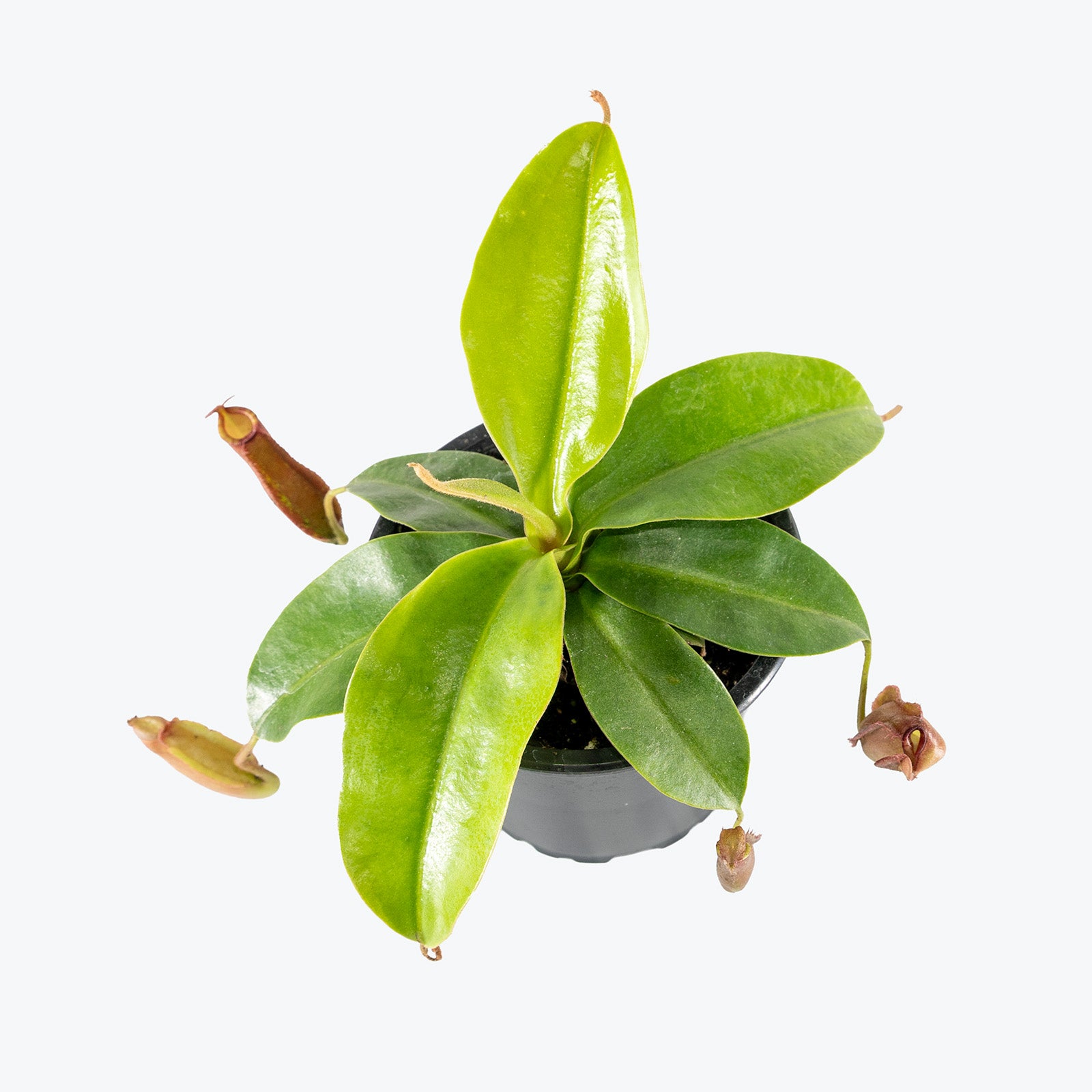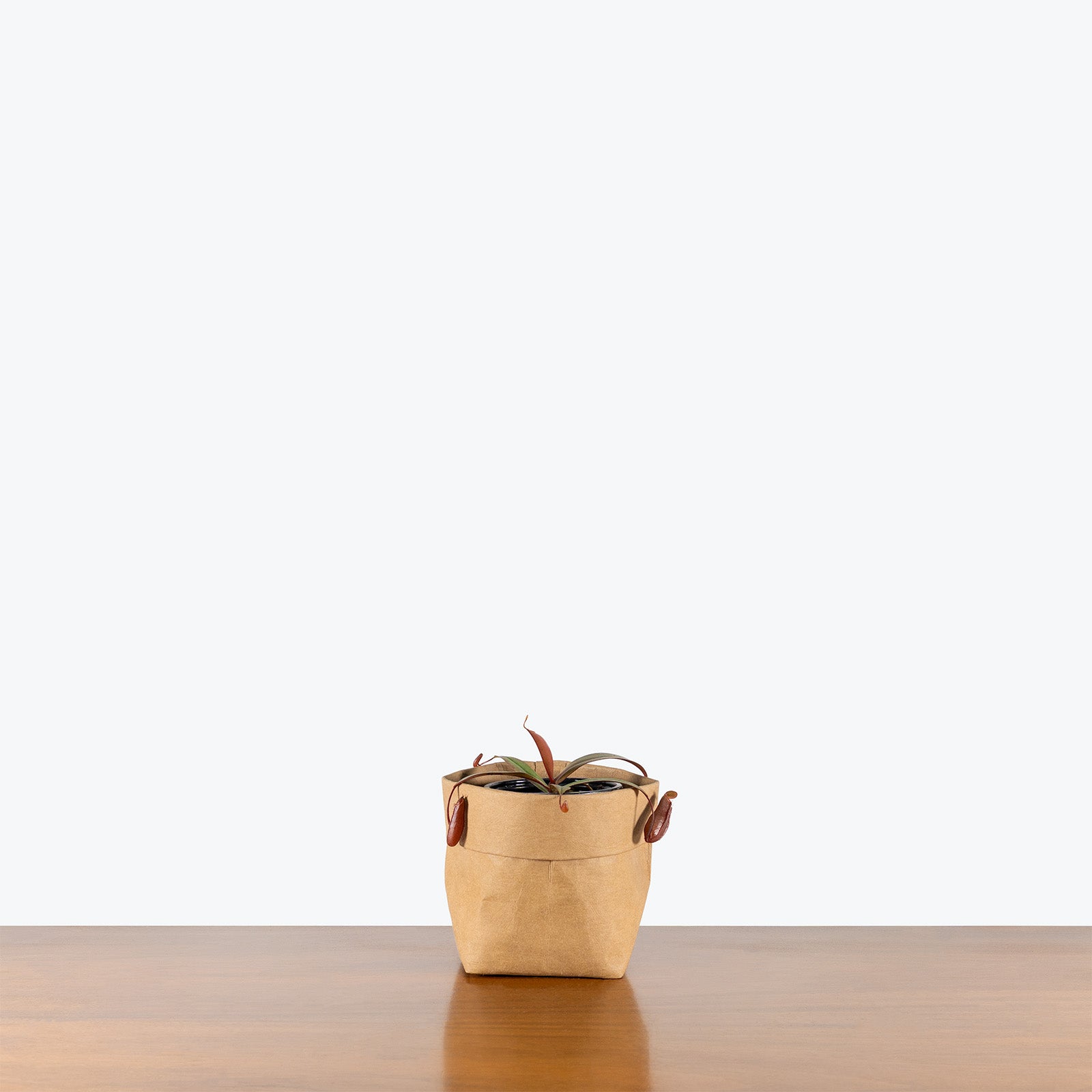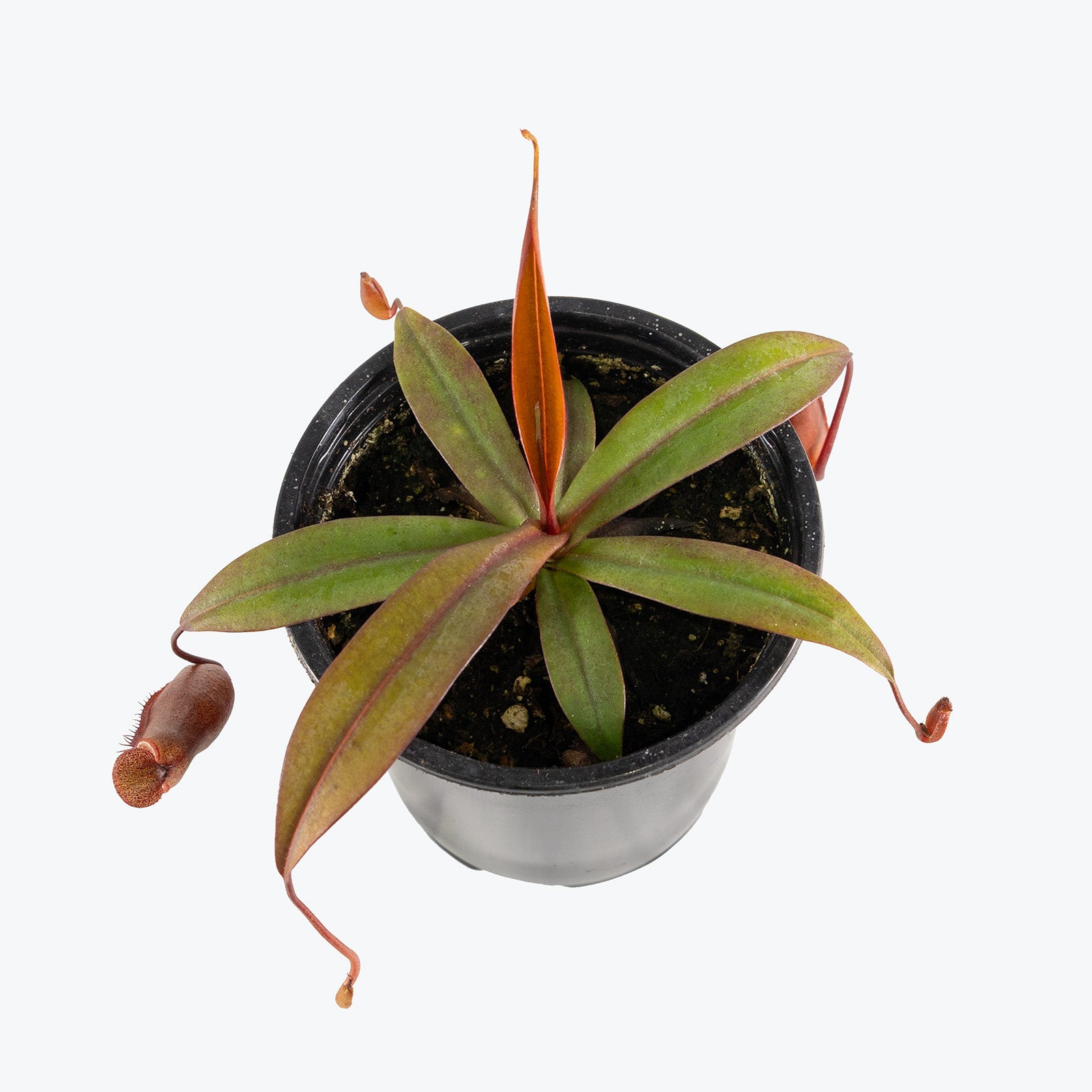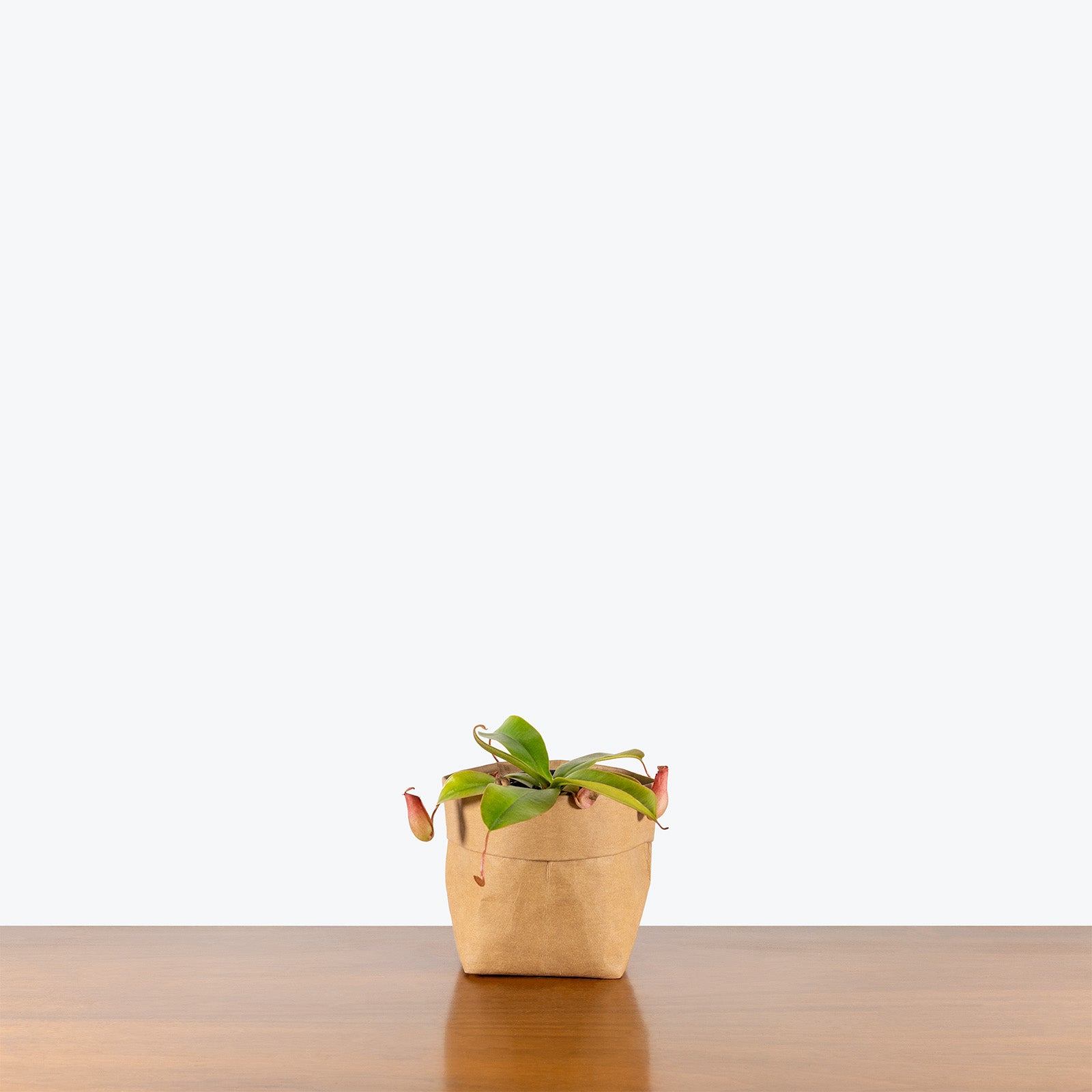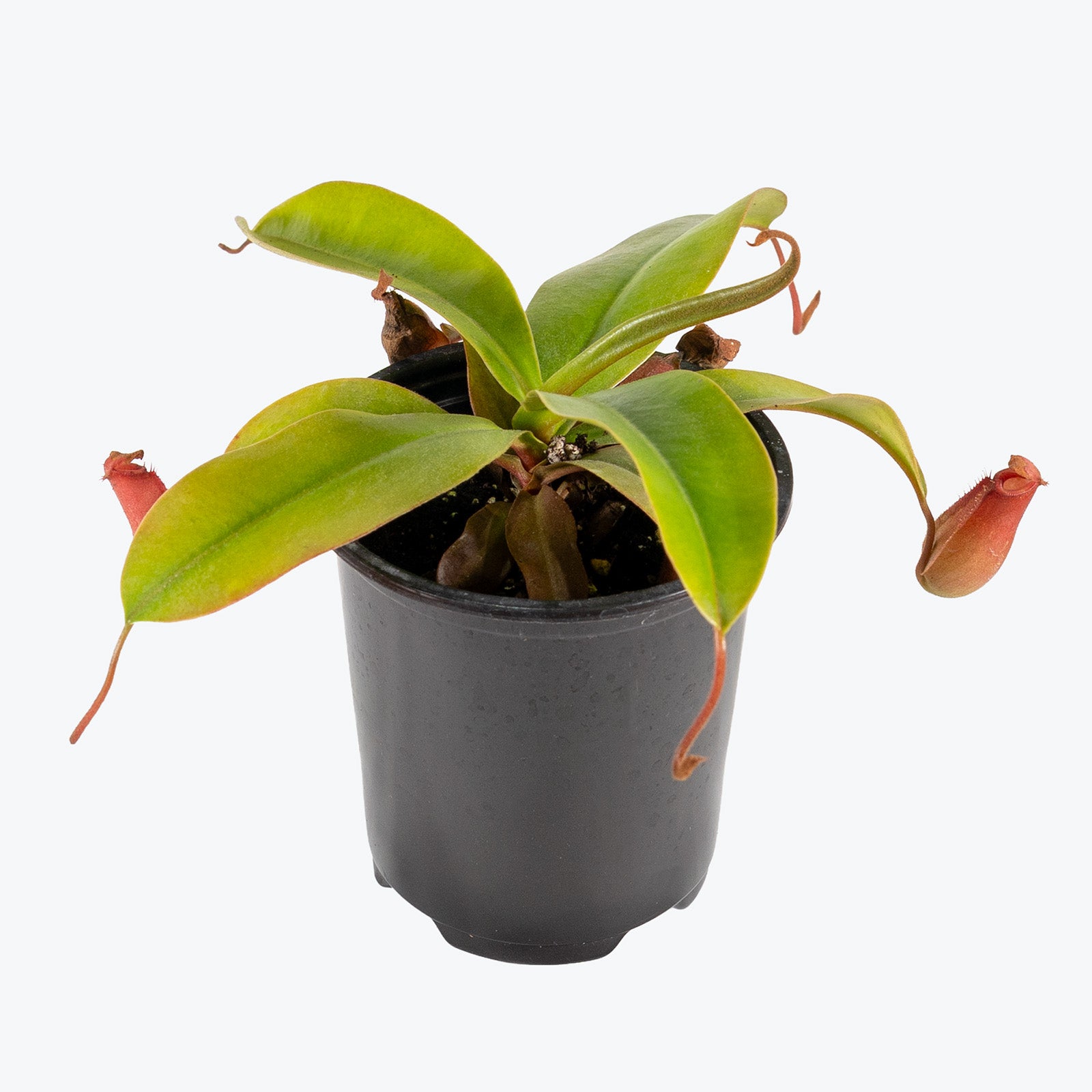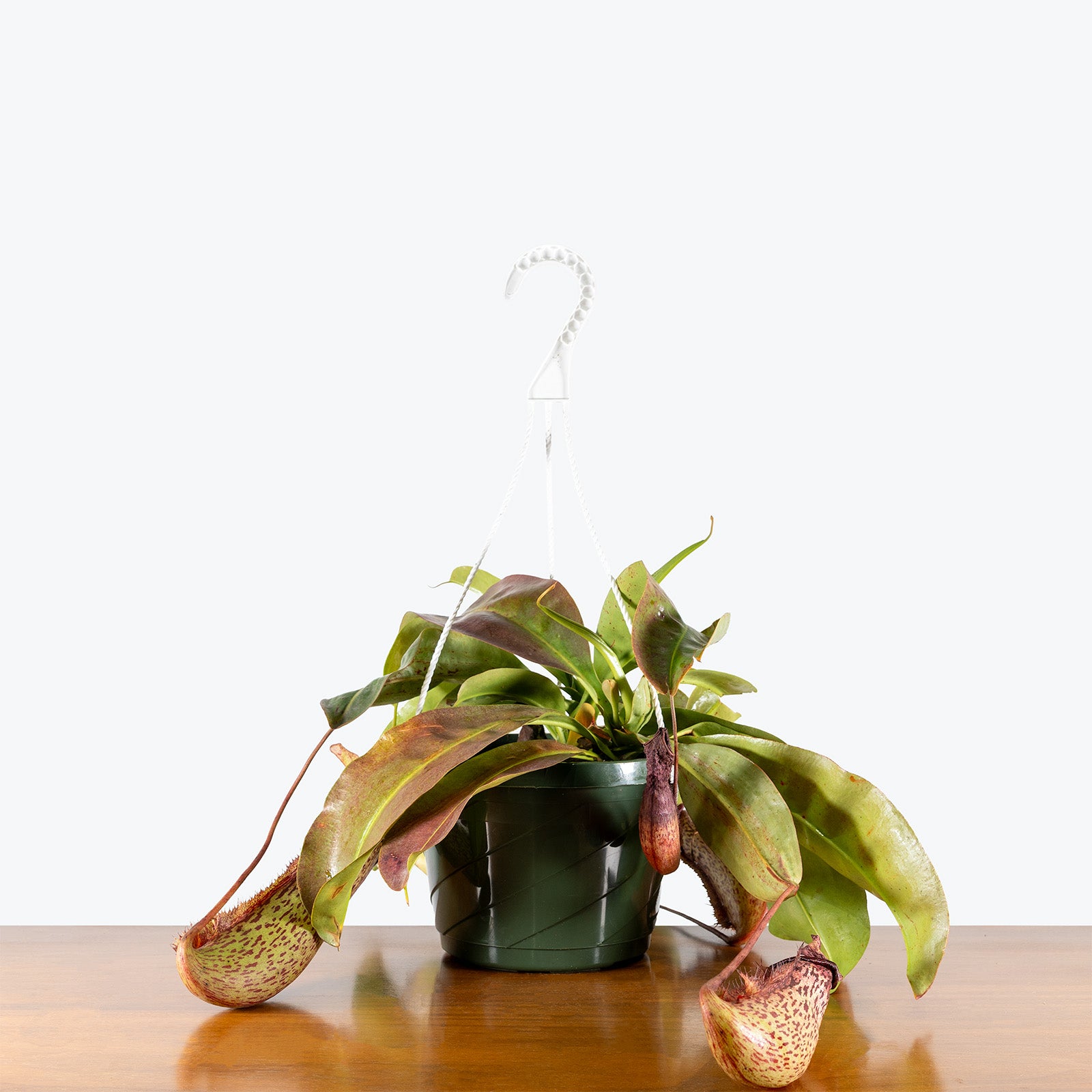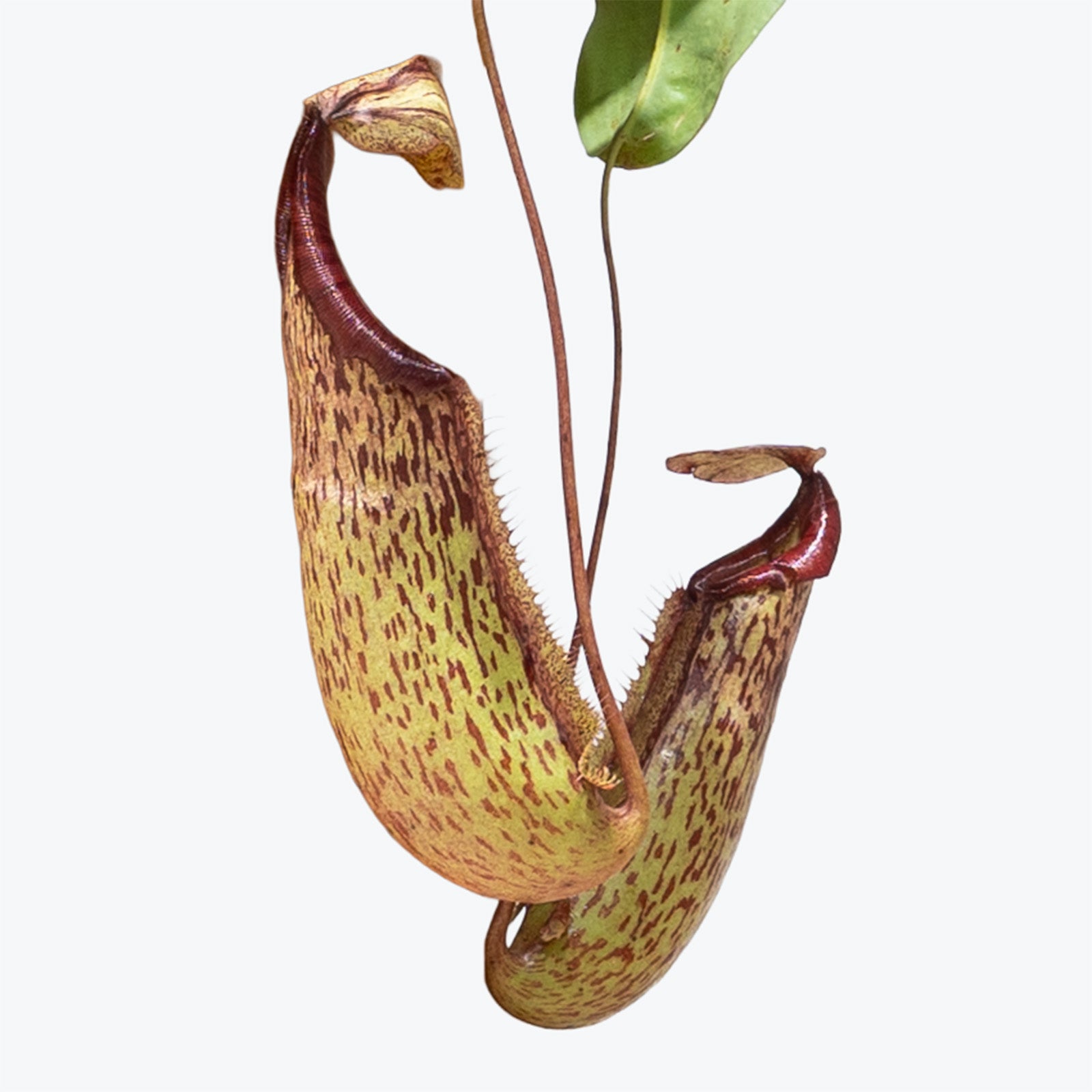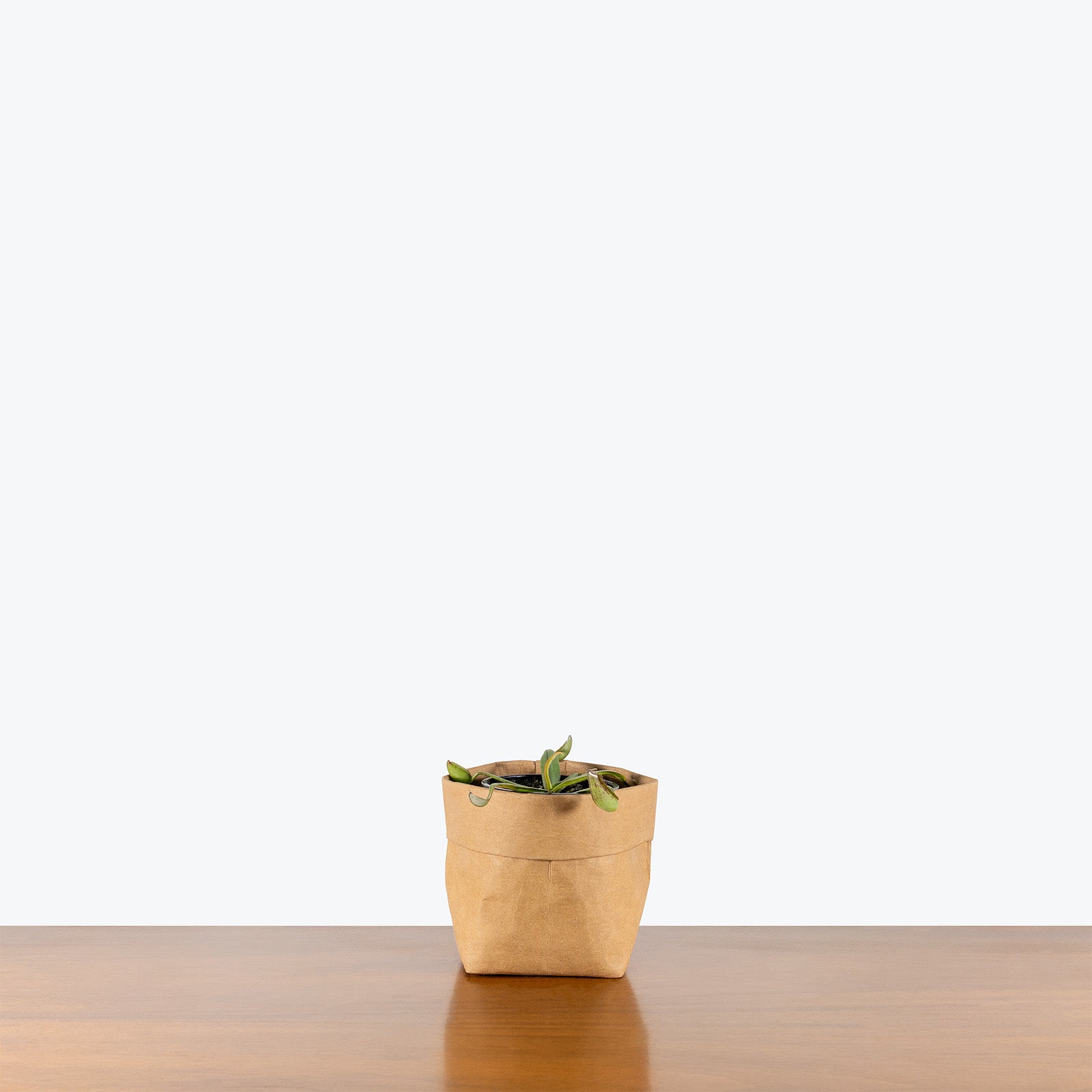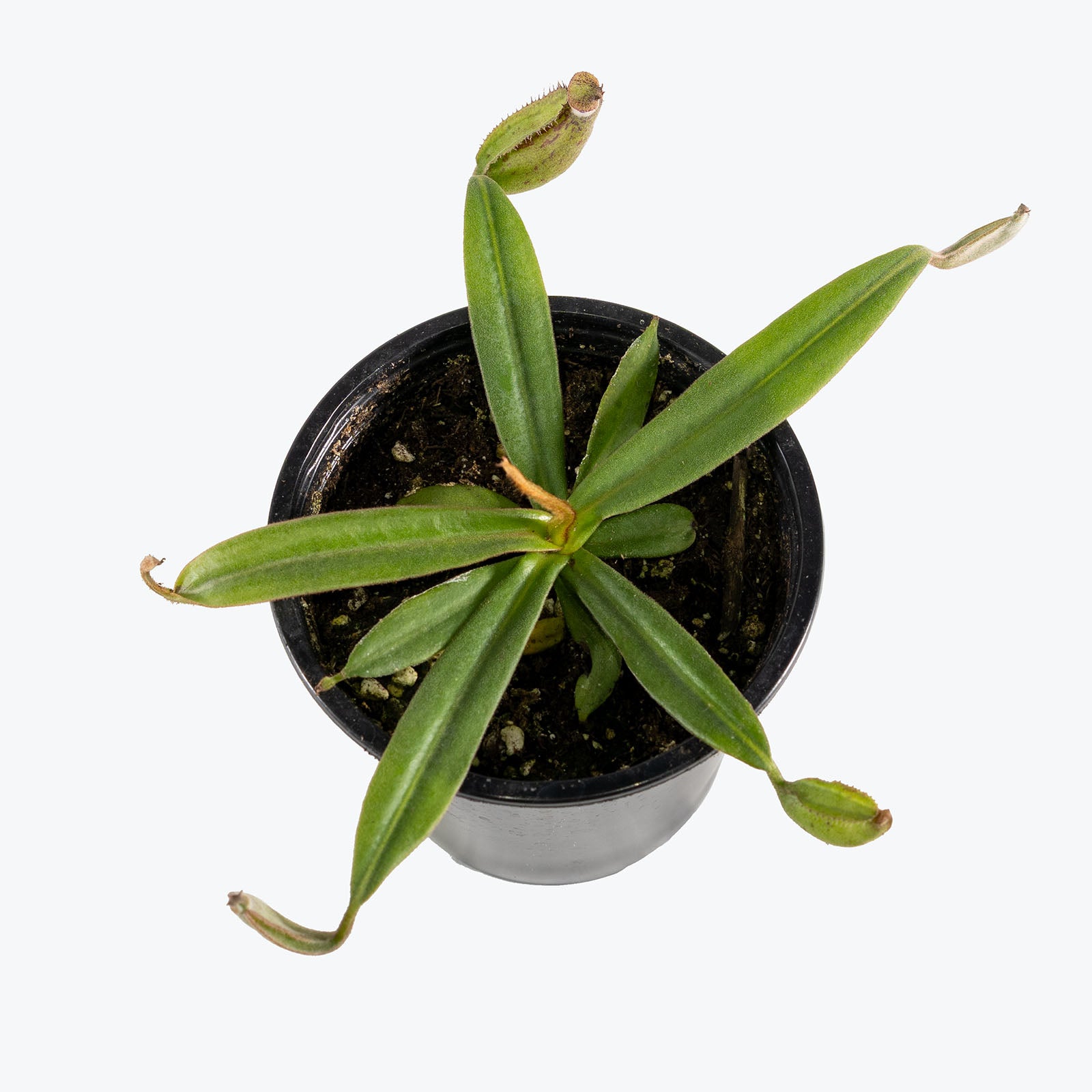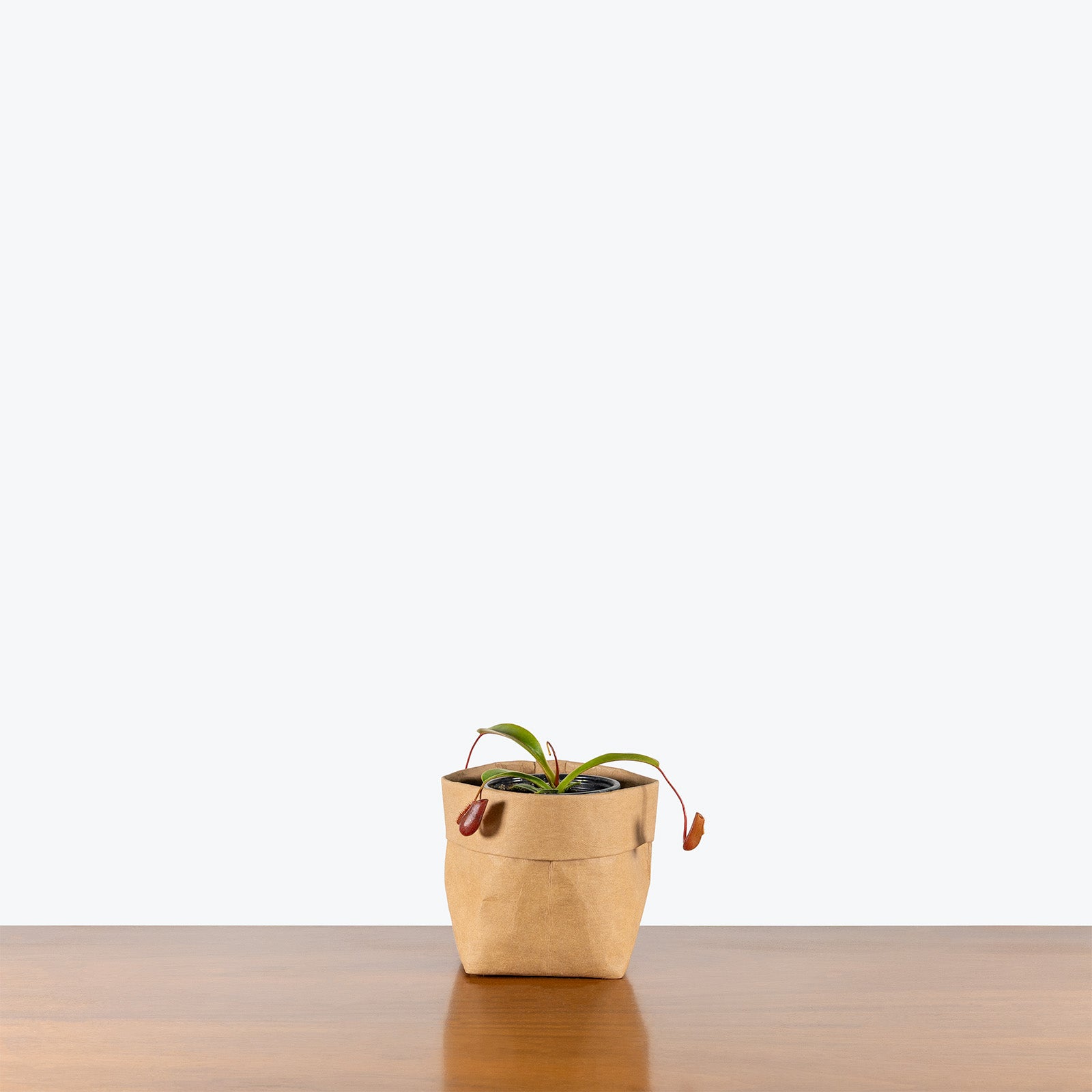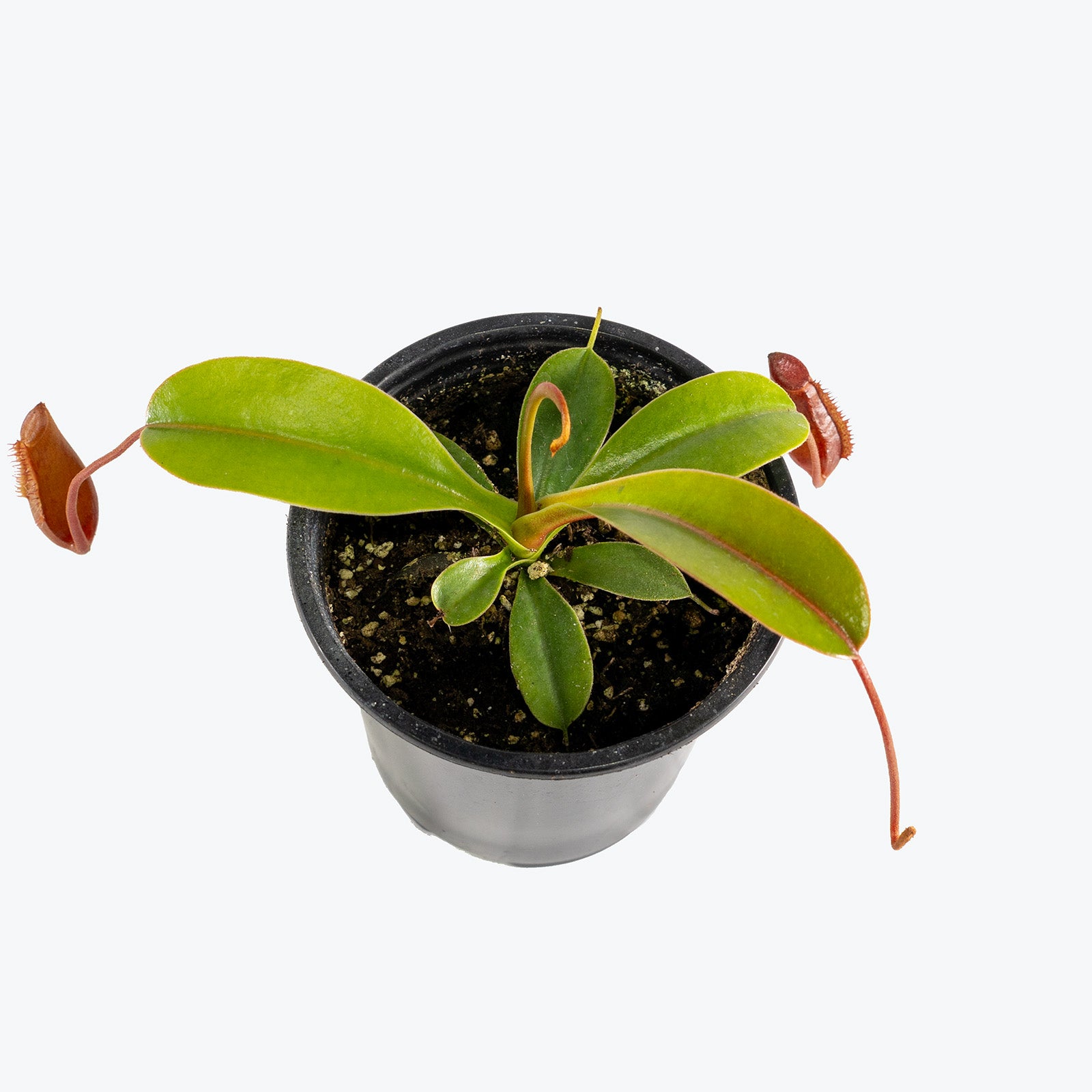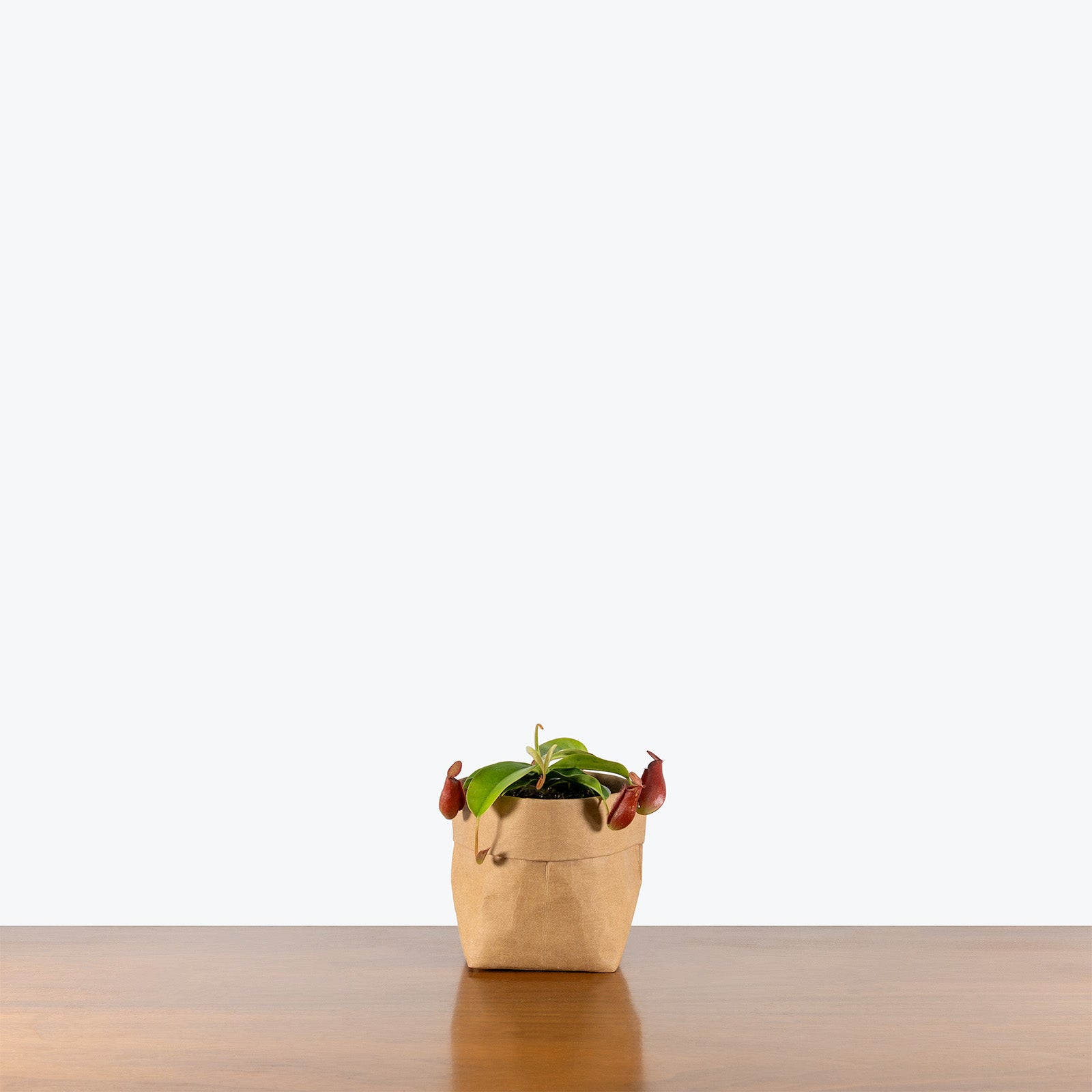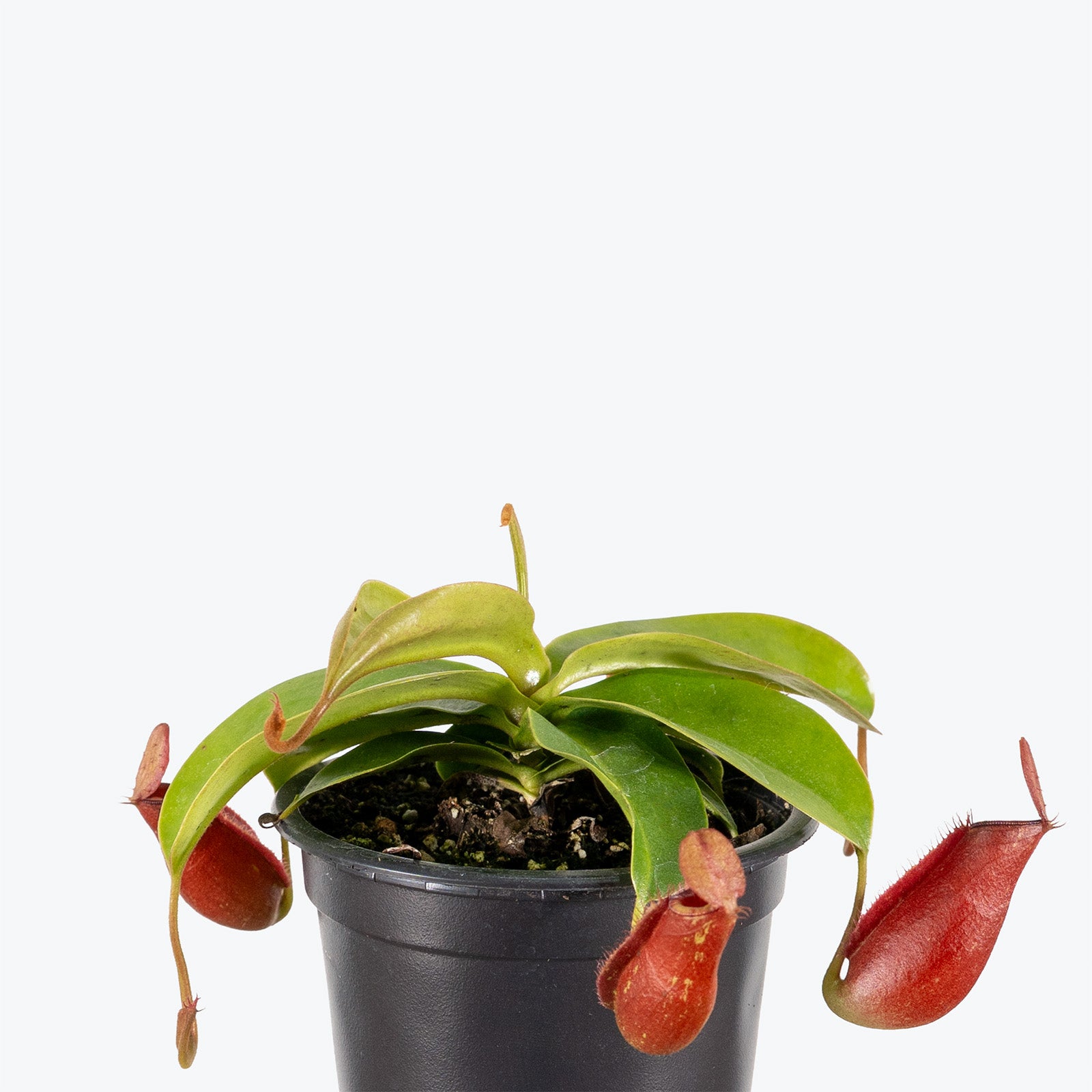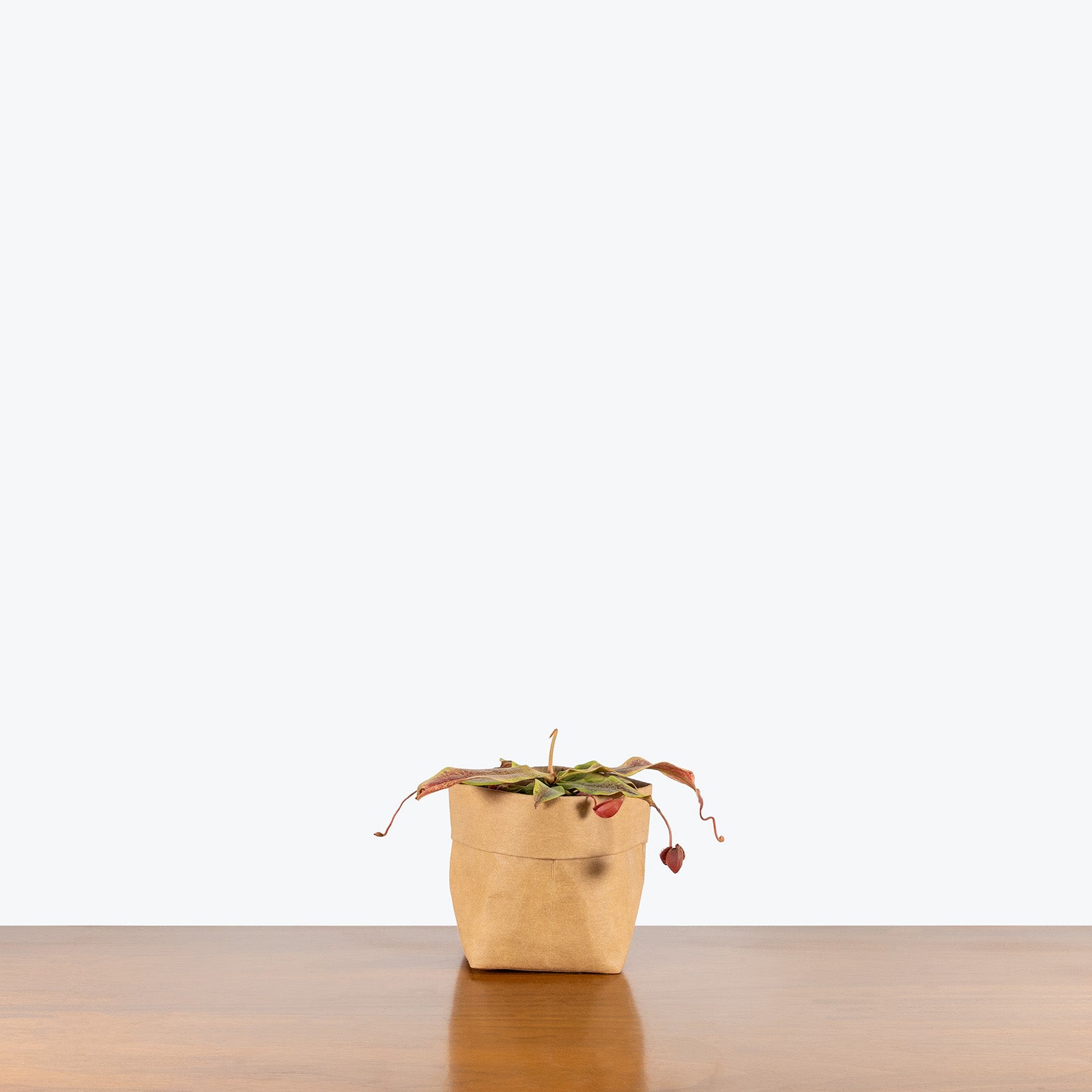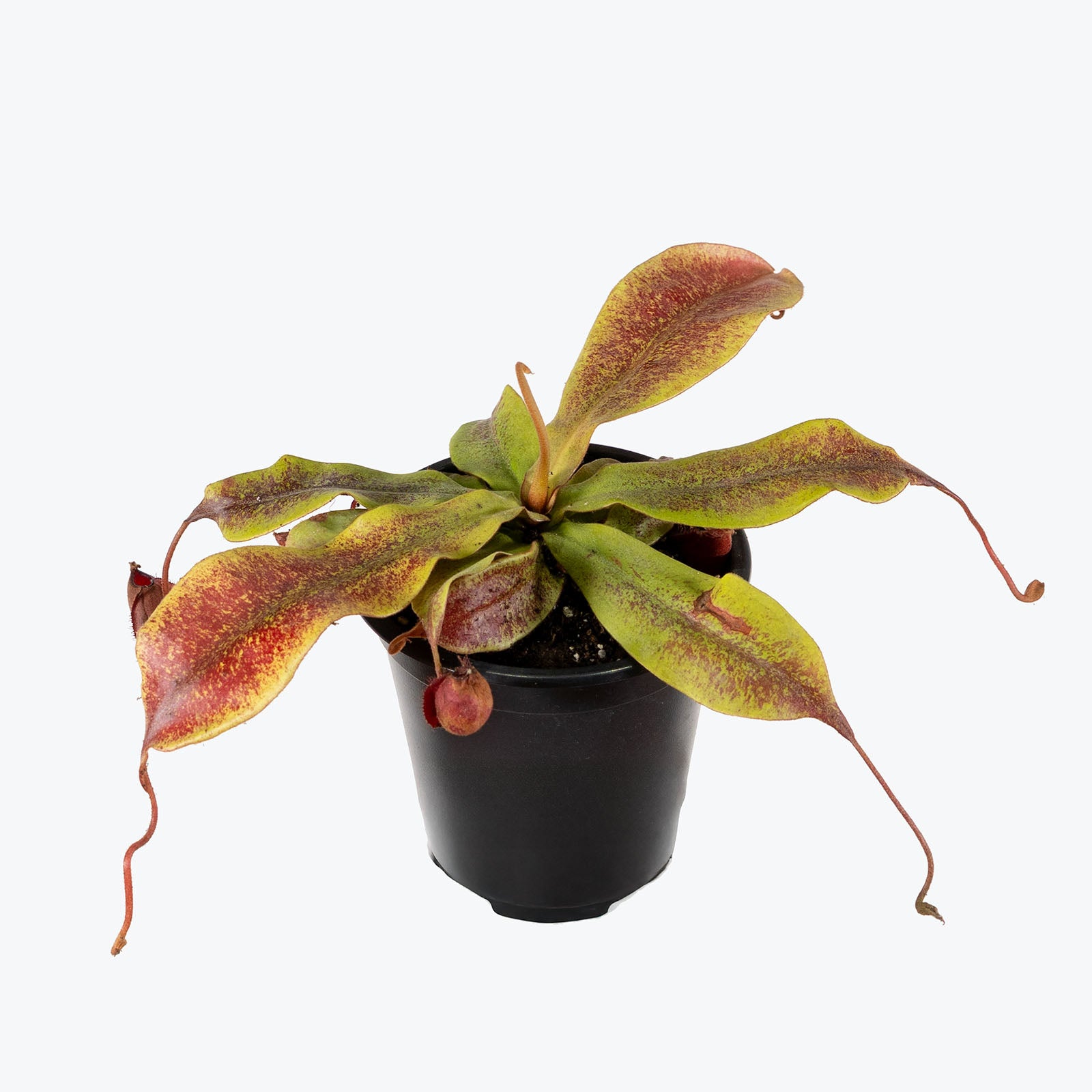
Nepenthes are tropical carnivorous plants that grow hanging pitchers at the ends of their leaves. Choose them for their unusual shapes and colours, from deep red cups to large, speckled traps, with space for tendrils and vines as the plant grows.
Match the variety to your growing conditions before choosing by pitcher colour. A bright window can suit adaptable hybrids, while warmth-loving varieties need a more controlled environment. Plan for low-mineral water, a freely draining mix and a frost-free indoor position.
Which Nepenthes should I choose for a bright indoor space?
Compare Rebecca Soper for dark red-purple pitchers and Bloody Mary for a compact starting form with red pitchers. Miranda is a larger-growing choice with speckled pitchers. These are useful starting points, but success still depends on light and growing conditions. Check the selected size and allow room for future vines.
If your room stays warm at night, compare that with the variety’s temperature guidance before choosing a highland type. If you cannot provide consistently warm, humid conditions, avoid selecting a specialist lowland cross simply for its pitcher colour. The lowland/highland explanation below helps narrow the choice.
What do lowland and highland Nepenthes mean?
These terms describe the temperature conditions a plant comes from. Lowland plants generally need warmer conditions, including warmer nights; highland plants usually benefit from cooler nights. Hybrids vary. The Black Miracle cross in this collection is listed for consistently warm, humid conditions. Check each product guide rather than assuming every Nepenthes will suit the same windowsill.
How should I water a Nepenthes?
Use rainwater, distilled water or reverse-osmosis water as a straightforward low-mineral choice. Water the mix thoroughly, then let excess drain completely. Keep it moist without leaving the pot standing in water or allowing it to become bone dry. Use an airy Nepenthes mix, such as long-fibre sphagnum with perlite, rather than ordinary fertilized potting soil.
Why is my Nepenthes growing leaves but no pitchers?
Check the amount of light first, then the temperature, moisture, roots and humidity needs of your variety. A plant may also pause pitcher production while adjusting to a new home. Give it stable conditions and increase light gradually if needed. Misting alone will not solve inadequate light or unsuitable temperatures, and existing brown pitchers will not turn green again.
Can Nepenthes stay outdoors through a Canadian winter?
No. These tropical pitcher plants need protection from frost and should spend the cold season in a suitable indoor growing space. Do not give them the cold outdoor treatment used for temperate Sarracenia pitcher plants. Insects supplement their nutrition but do not replace light; you do not need to provide large prey or meat, and a plant should not be relied on to control a household pest problem.
If you’re unhappy with your plants for any reason, contact us within 15 days, we'll sort it out for you. 30 days for accessories.
Lifetime Support
If you have questions about your plant at any point or are just not sure if it is doing something good or bad, our plant experts are always here for you to guide you in the right direction.
Carbon-Neutral Delivery
Get carbon-neutral delivery across Canada, and enjoy free local delivery* to have your plants delivered by one of our friendly team members in Toronto and cities around Toronto.
Packed with Care
Plastic negative, and eco-friendly packaging, we spend every effort to make sure your plants arrive in their best condition with minimal environmental impact.
Delivery and shipping
Loading delivery checker…
Delivery checker could not load. Please try again.