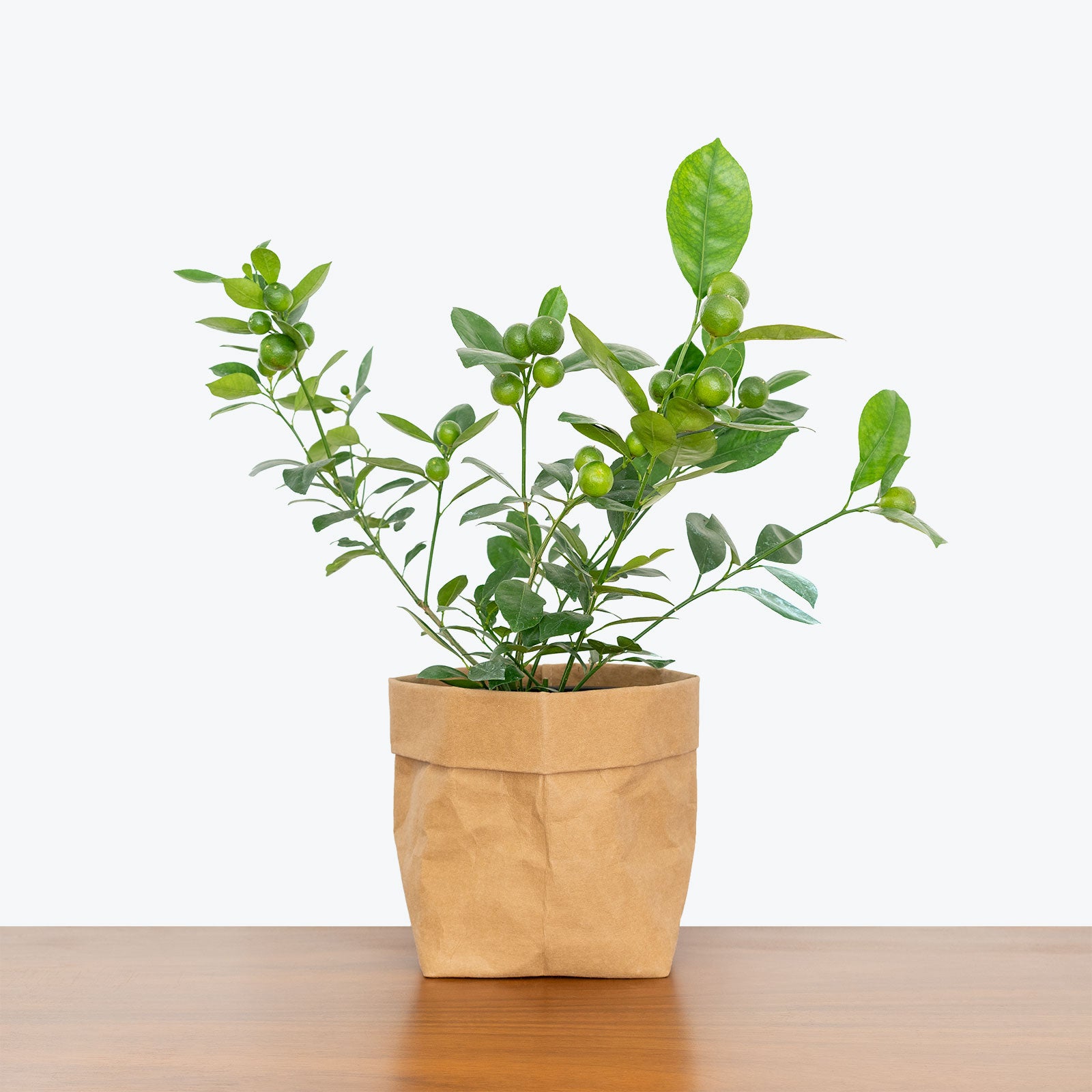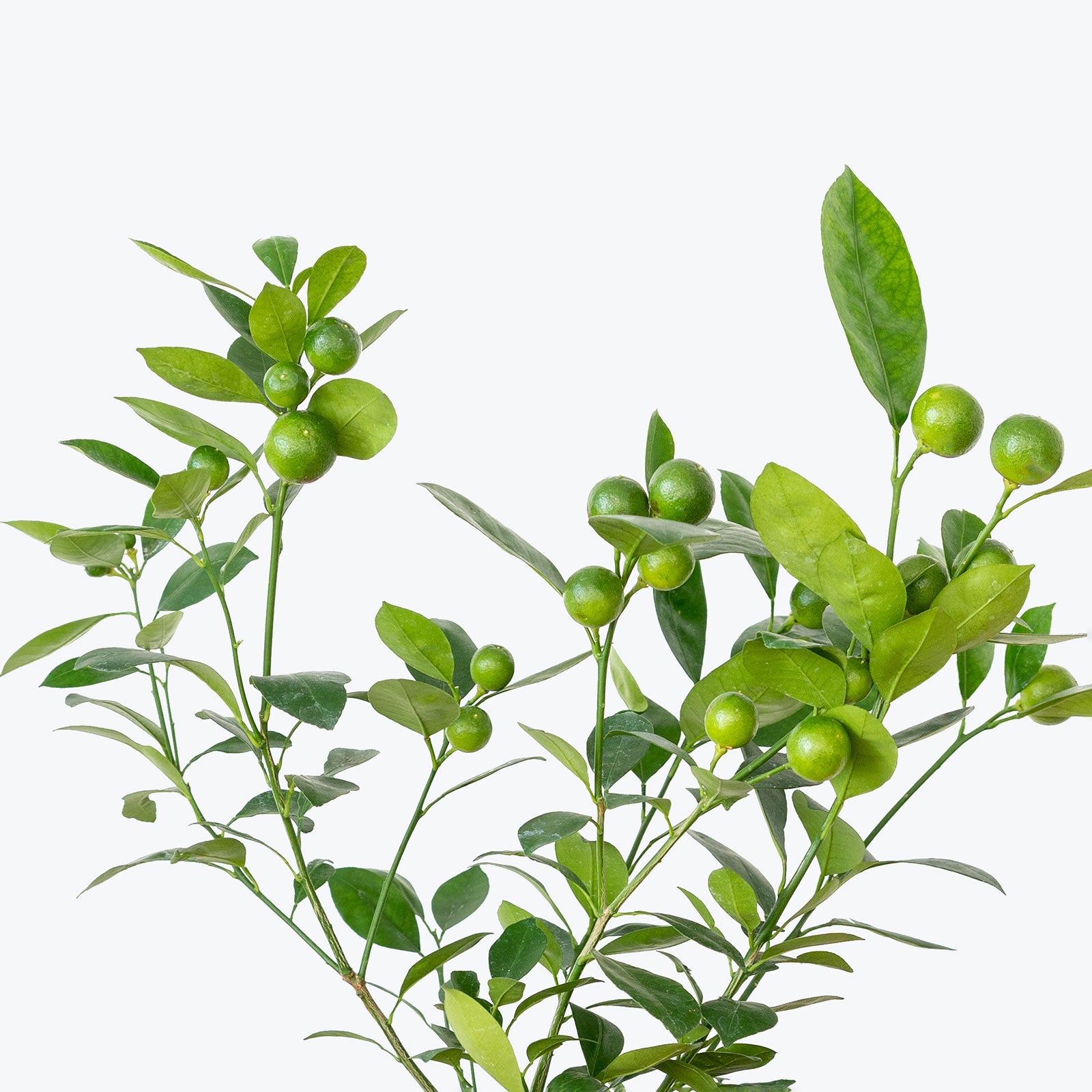
Citrus trees bring glossy foliage and fragrant flowers to a sunny space, with the possibility of homegrown fruit. Choose Lemon or Lime for familiar flavours, Calamondin for small, sour orange fruit, or Australian Finger Lime for its bead-like pulp. Pink Variegated Lemon adds patterned leaves and pink-fleshed fruit.
Before choosing, plan where your tree will receive strong light through winter. Citrus can spend warm months on a patio, but needs a protected indoor home when temperatures fall. Match the listed size to your available space and enjoy fruit as a possibility that depends on maturity and growing conditions.
How do the citrus varieties differ?
Lemon Tree is listed as Meyer Lemon, while Lime Tree offers the familiar tart green fruit. Calamondin Orange produces small, sour fruit rather than sweet snacking oranges. Choose Australian Finger Lime for its unusual pulp, or Pink Variegated Lemon for decorative leaves and pink flesh. Check each listing for the current plant size and photographs.
How much light does an indoor citrus tree need?
Give citrus your sunniest suitable window, ideally with several hours of direct sunlight each day. A south-facing window is often a useful starting point, but nearby buildings and trees can reduce the light. Add a grow light if winter daylight is insufficient, especially if flowering and fruiting are your goal. Keep the tree away from heating vents and cold drafts.
Will my citrus tree produce fruit indoors?
It can, but fruit is not guaranteed. Maturity, strong light, suitable nutrition and steady care all matter, and ripening can take months. Many commonly grown citrus varieties are self-fertile, so a second tree is often unnecessary. Indoors, gently transferring pollen between open flowers with a small dry brush can help where pollinating insects are absent. Flowering or a few developing fruits do not guarantee a full harvest.
How should I water a potted citrus tree?
Check the soil regularly and water when the upper layer has dried, before the whole root ball becomes dry. Soak the mix thoroughly, let the excess drain and empty the saucer. A sunny patio can dry a pot much faster than an indoor winter position, so avoid a fixed weekly routine. Use a pot with drainage and a mix that retains some moisture without staying waterlogged.
Can I move my citrus tree outdoors in summer?
Yes, once temperatures are reliably warm and frost risk has passed. Begin in a sheltered spot with gentler light and increase sun exposure gradually. Move the tree back inside before cold weather, checking for pests first. These citrus trees should not be treated as winter-hardy garden trees across Canada; plan a bright, frost-free place for the colder months.
If you’re unhappy with your plants for any reason, contact us within 15 days, we'll sort it out for you. 30 days for accessories.
Lifetime Support
If you have questions about your plant at any point or are just not sure if it is doing something good or bad, our plant experts are always here for you to guide you in the right direction.
Carbon-Neutral Delivery
Get carbon-neutral delivery across Canada, and enjoy free local delivery* to have your plants delivered by one of our friendly team members in Toronto and cities around Toronto.
Packed with Care
Plastic negative, and eco-friendly packaging, we spend every effort to make sure your plants arrive in their best condition with minimal environmental impact.
Delivery and shipping
Loading delivery checker…
Delivery checker could not load. Please try again.