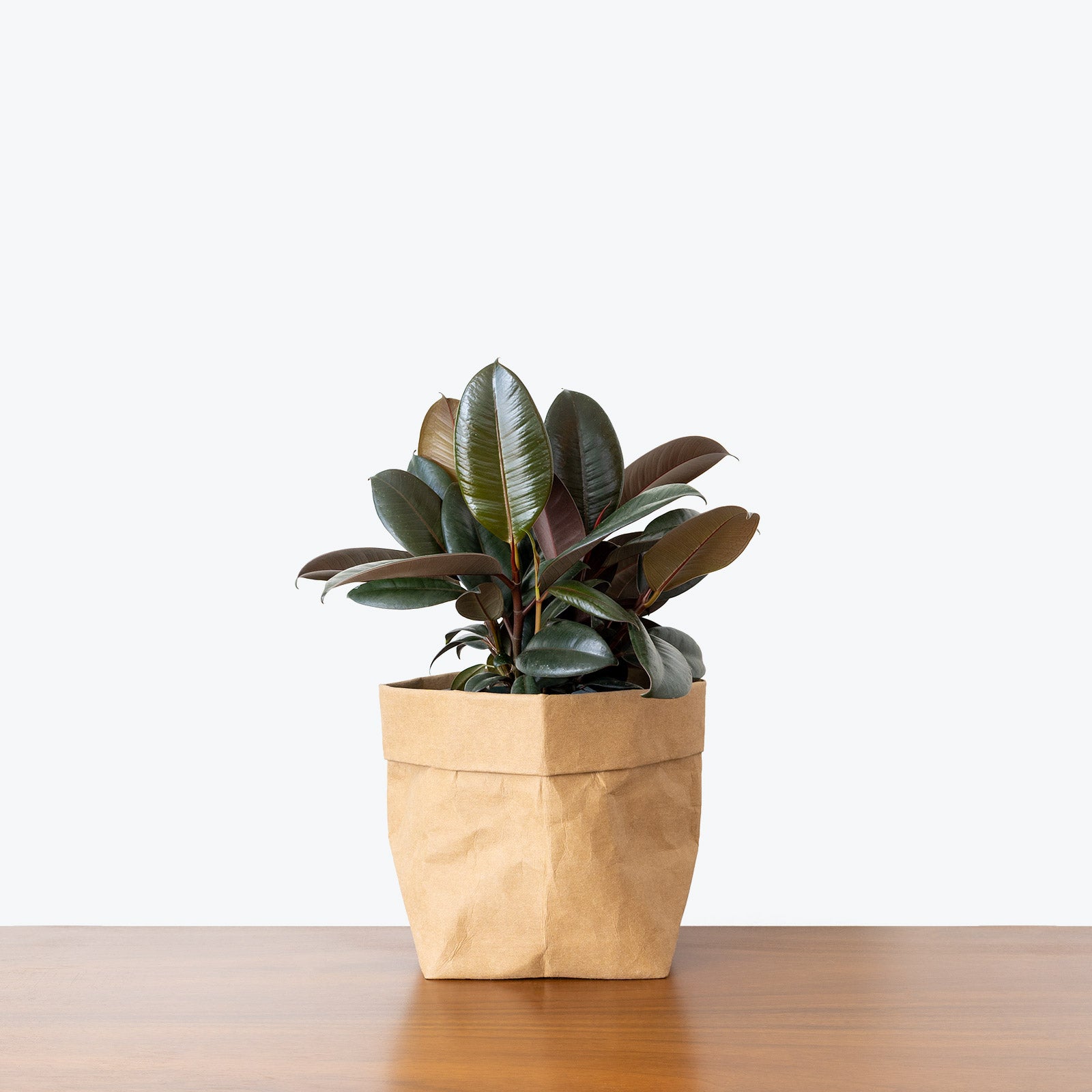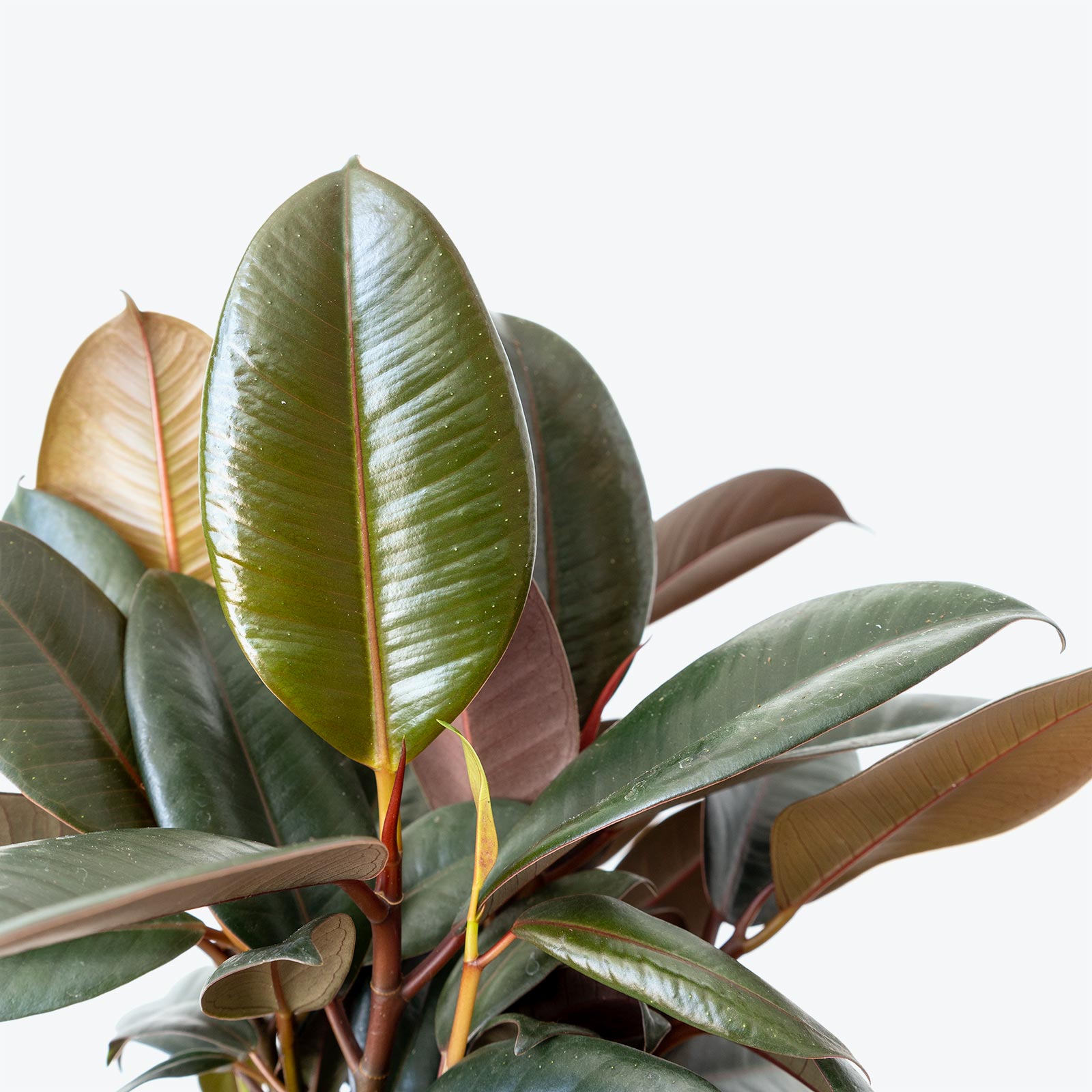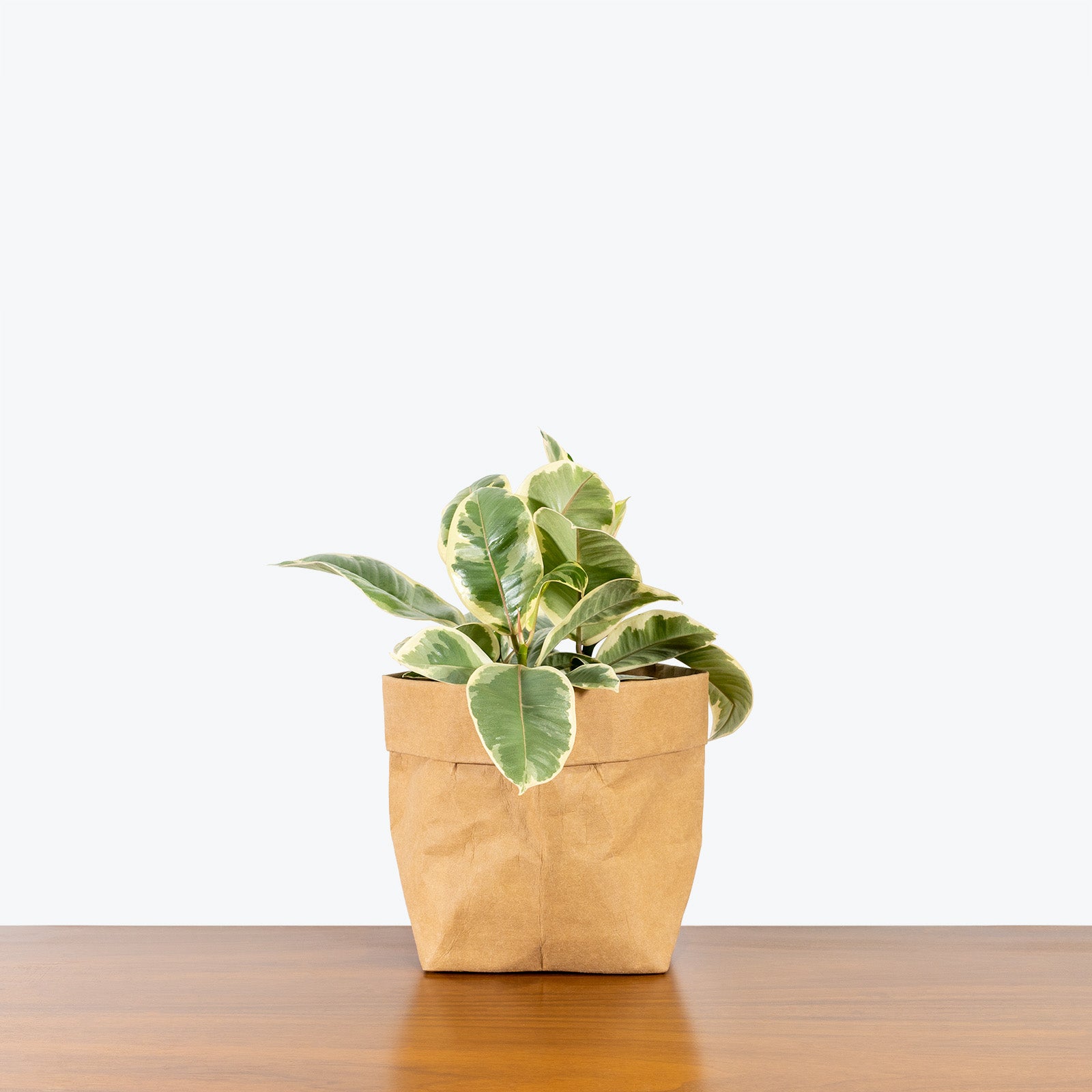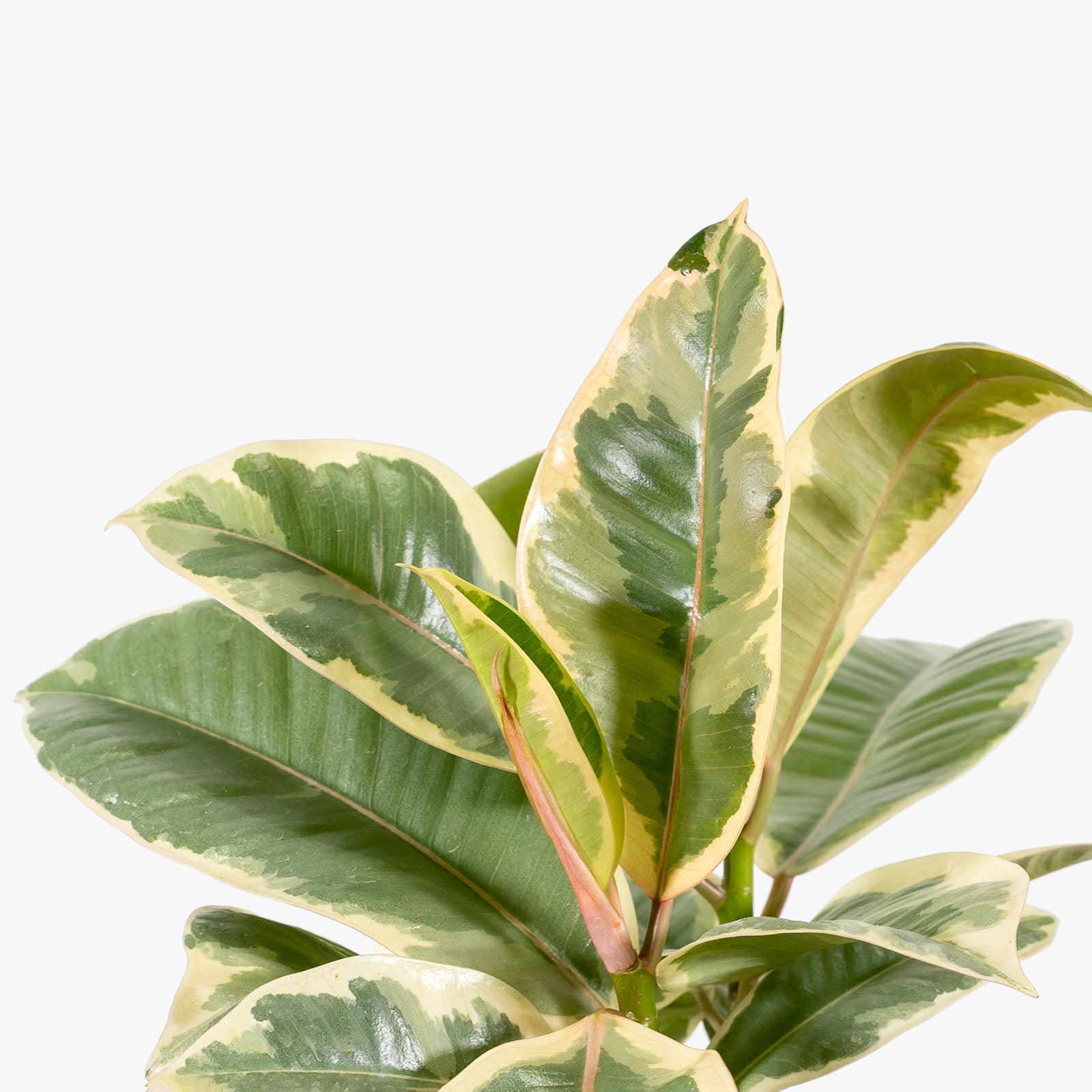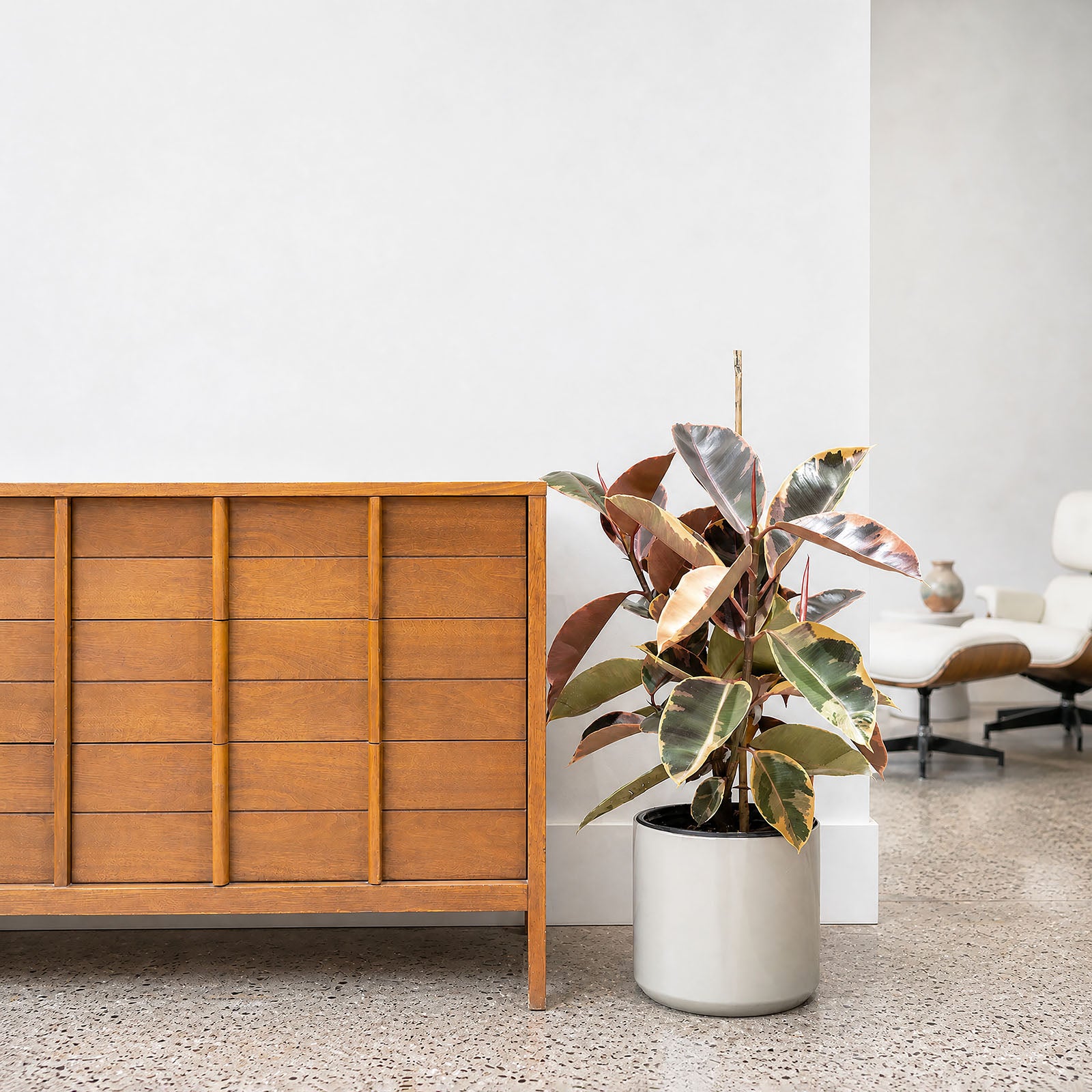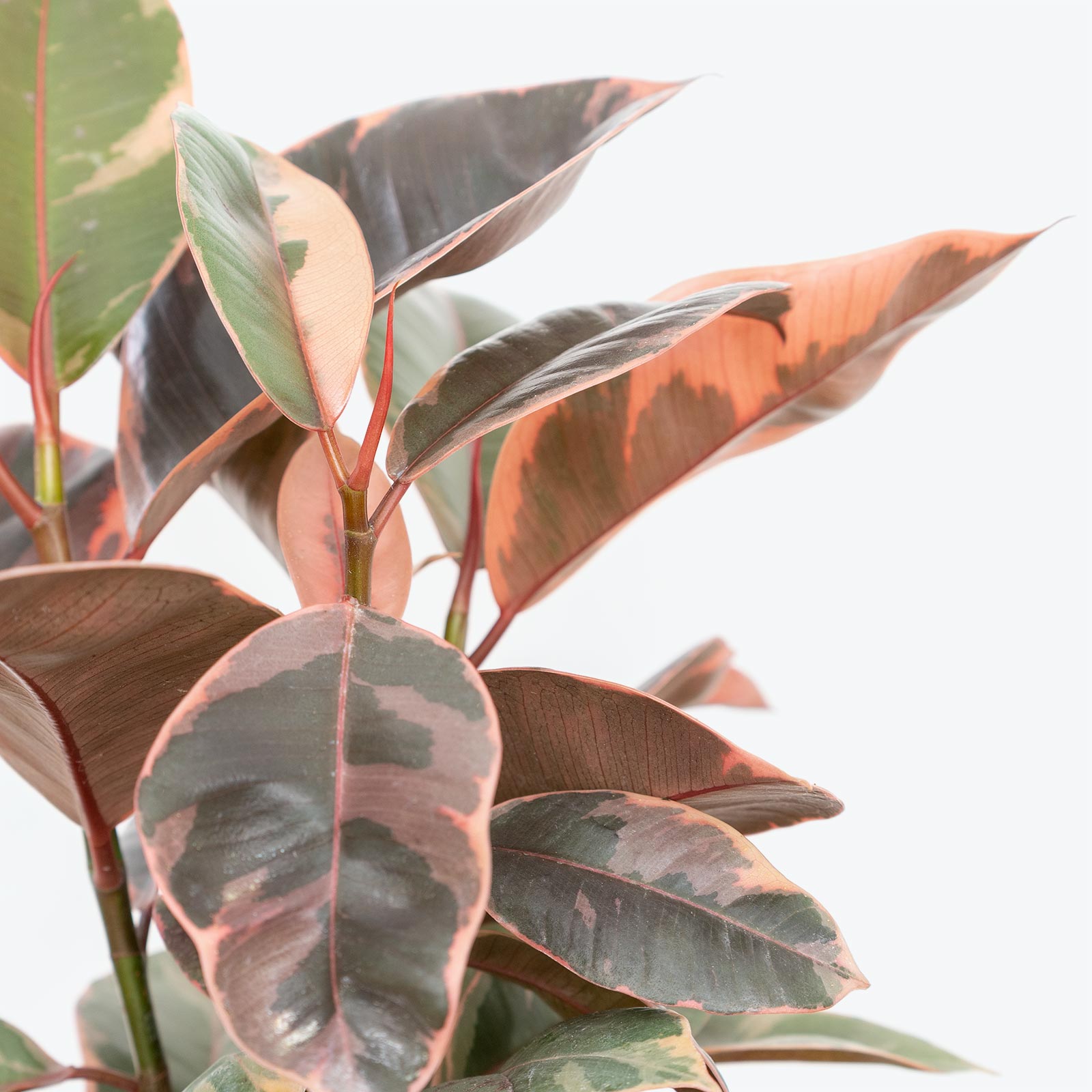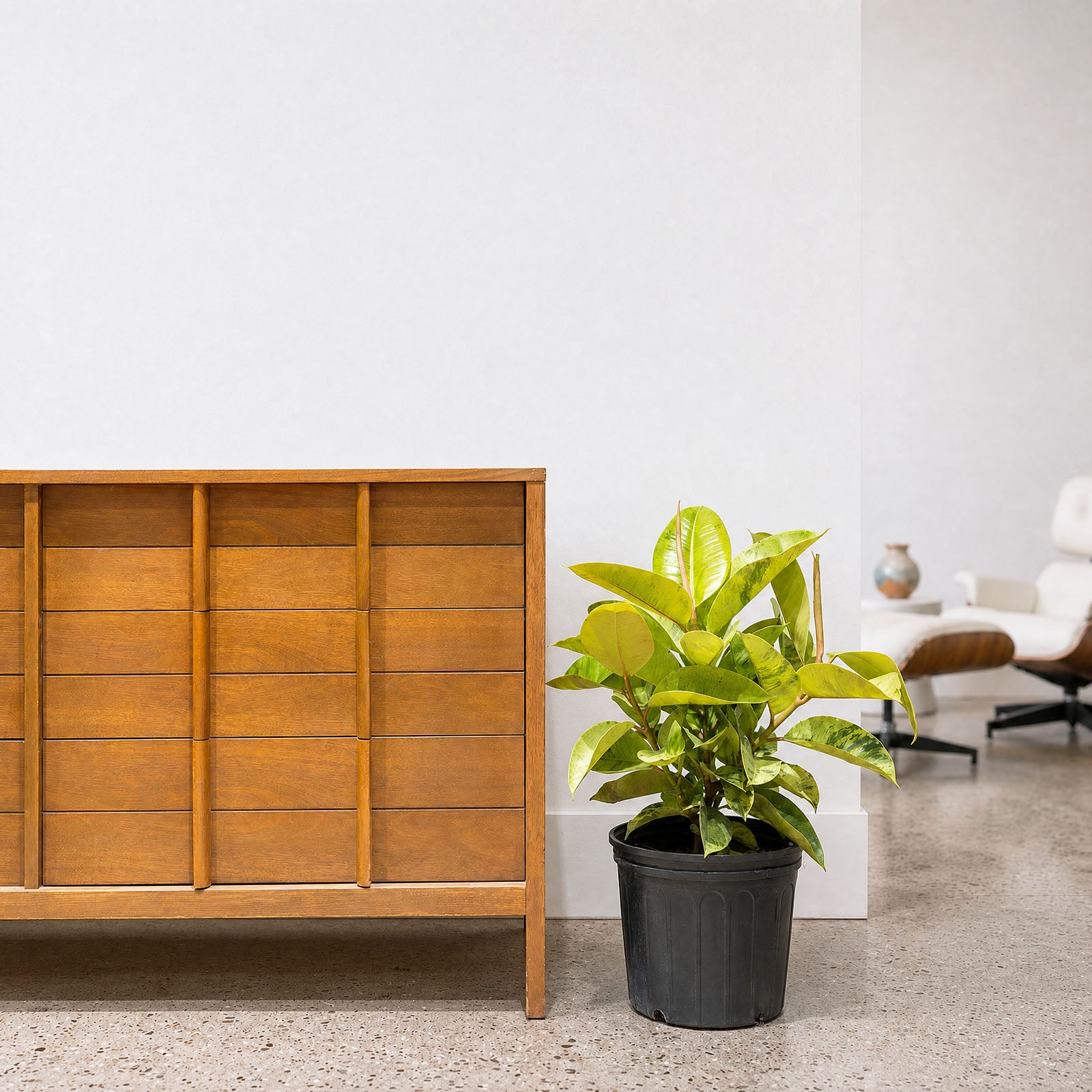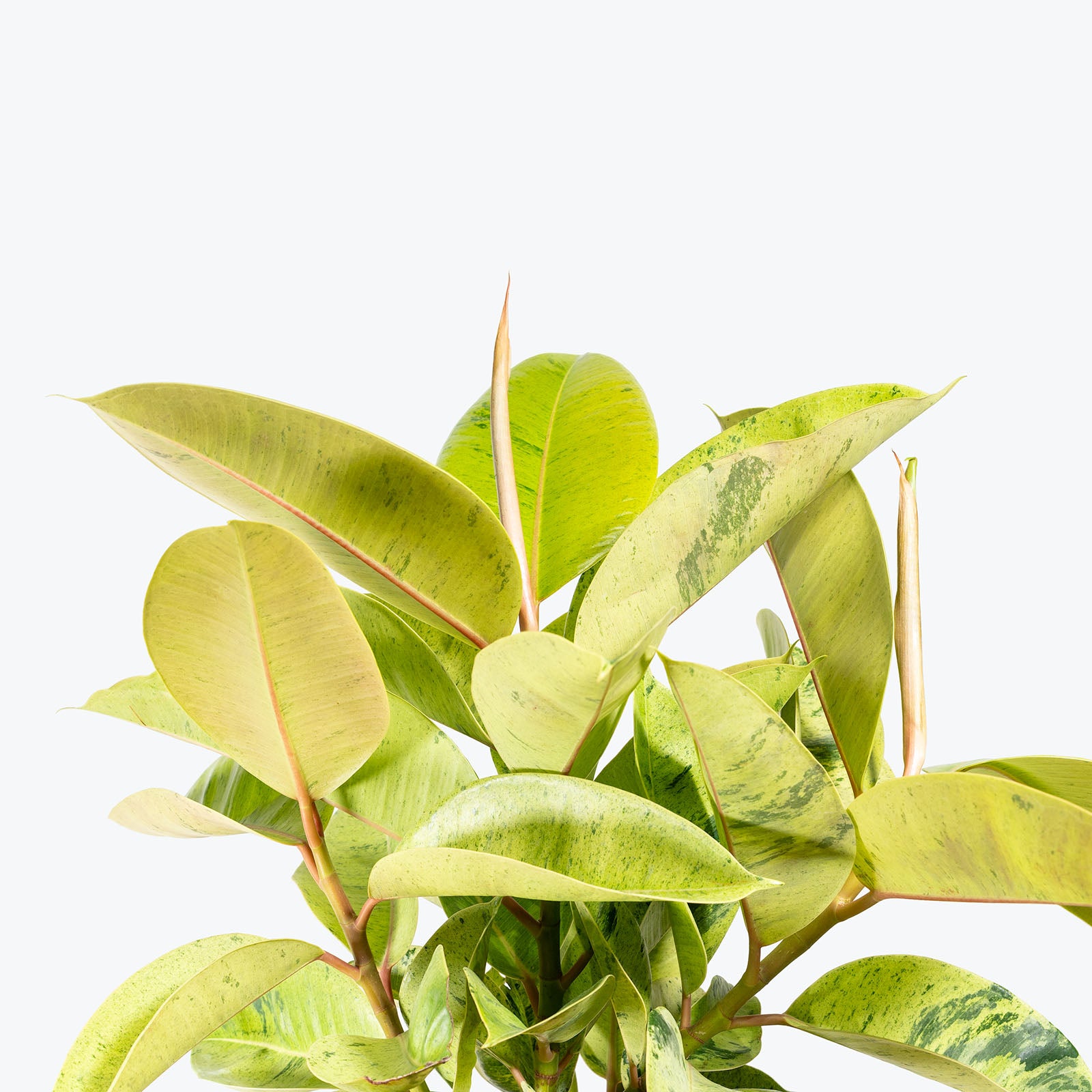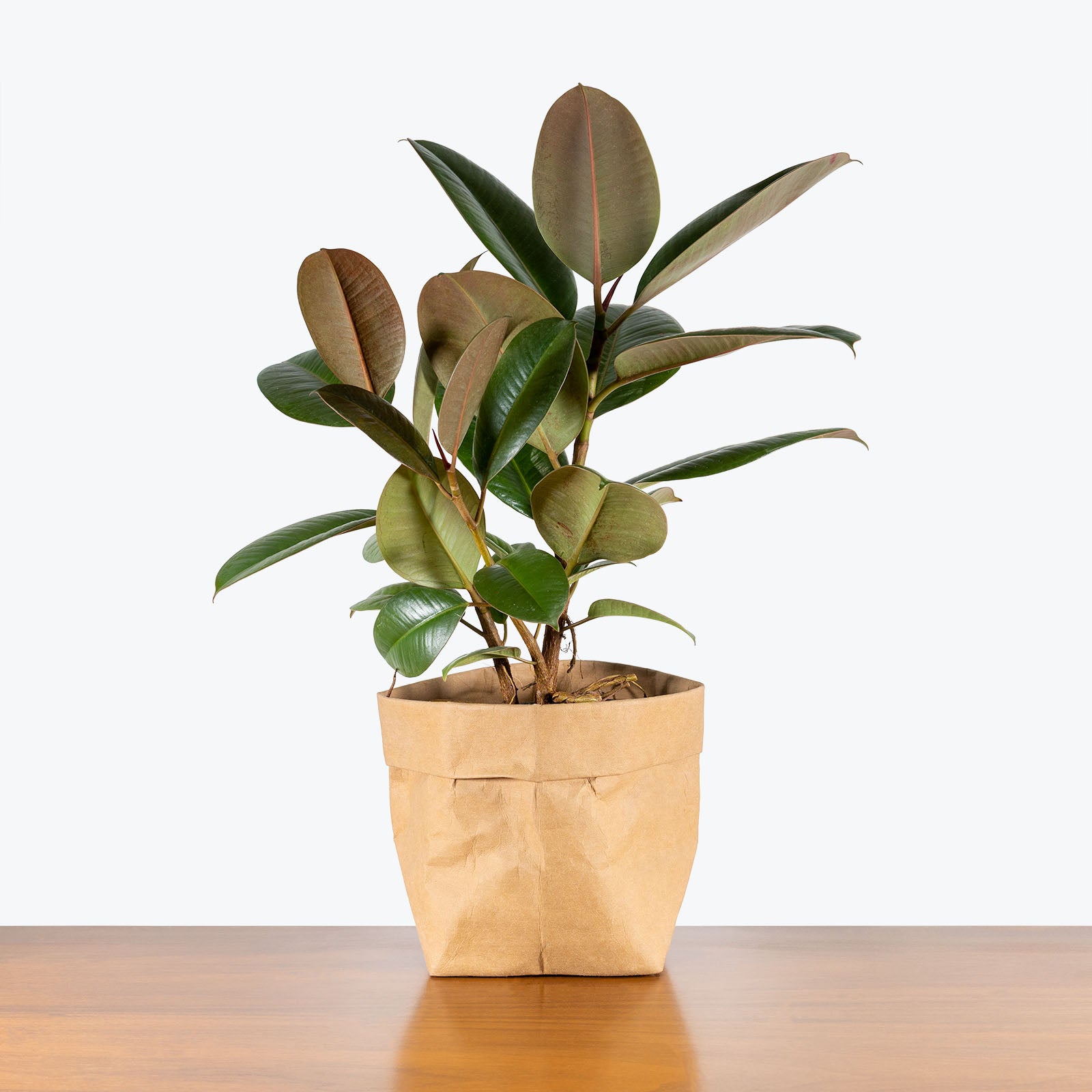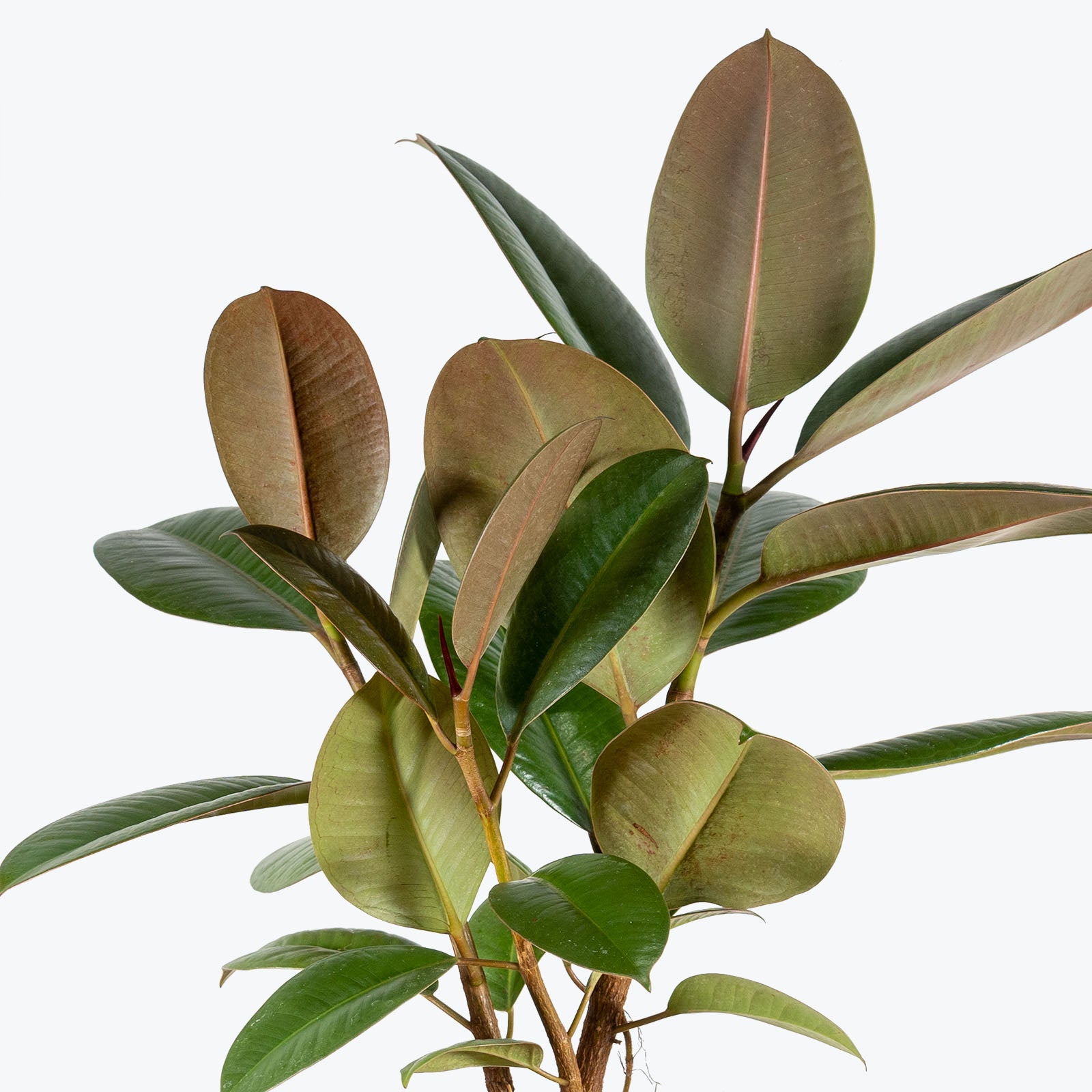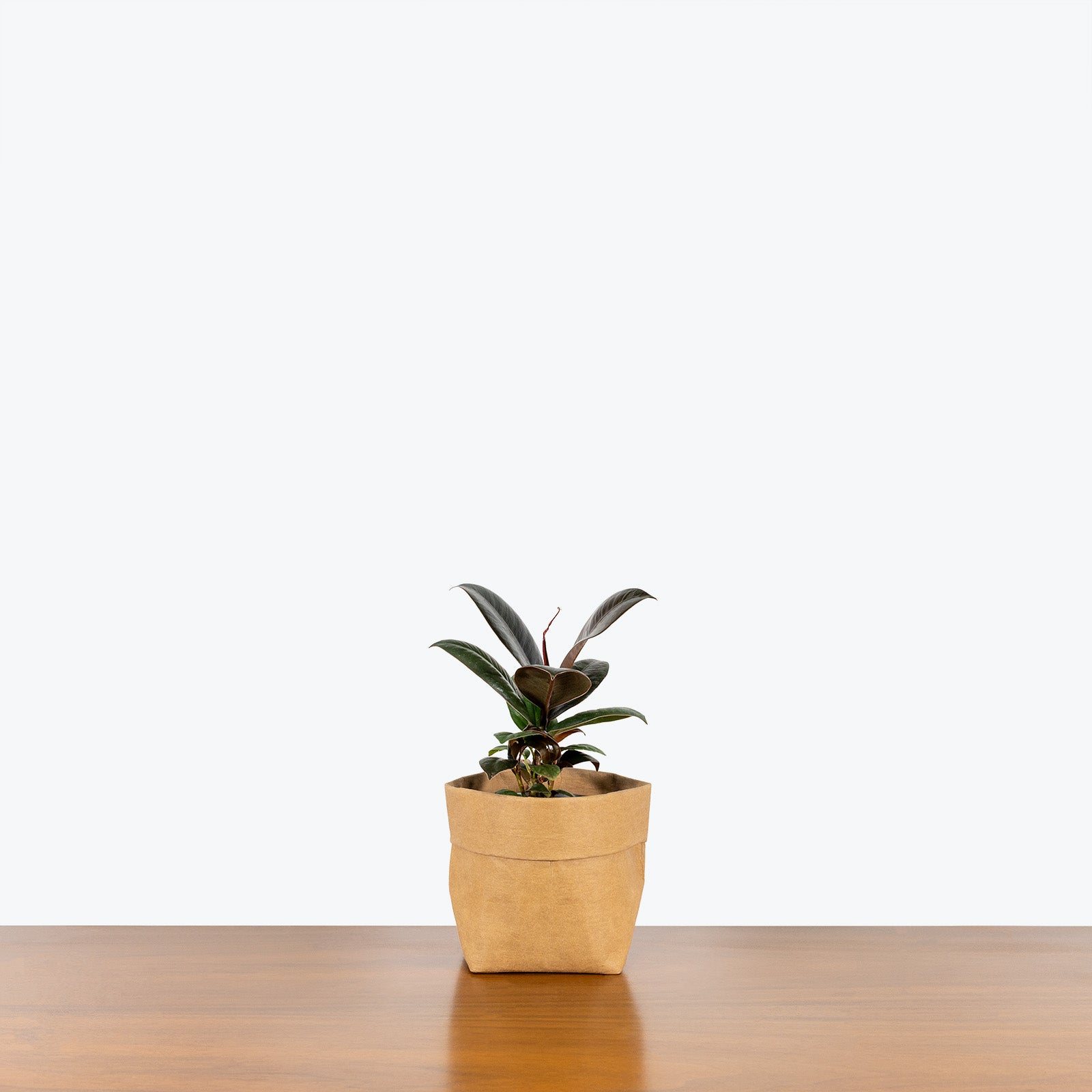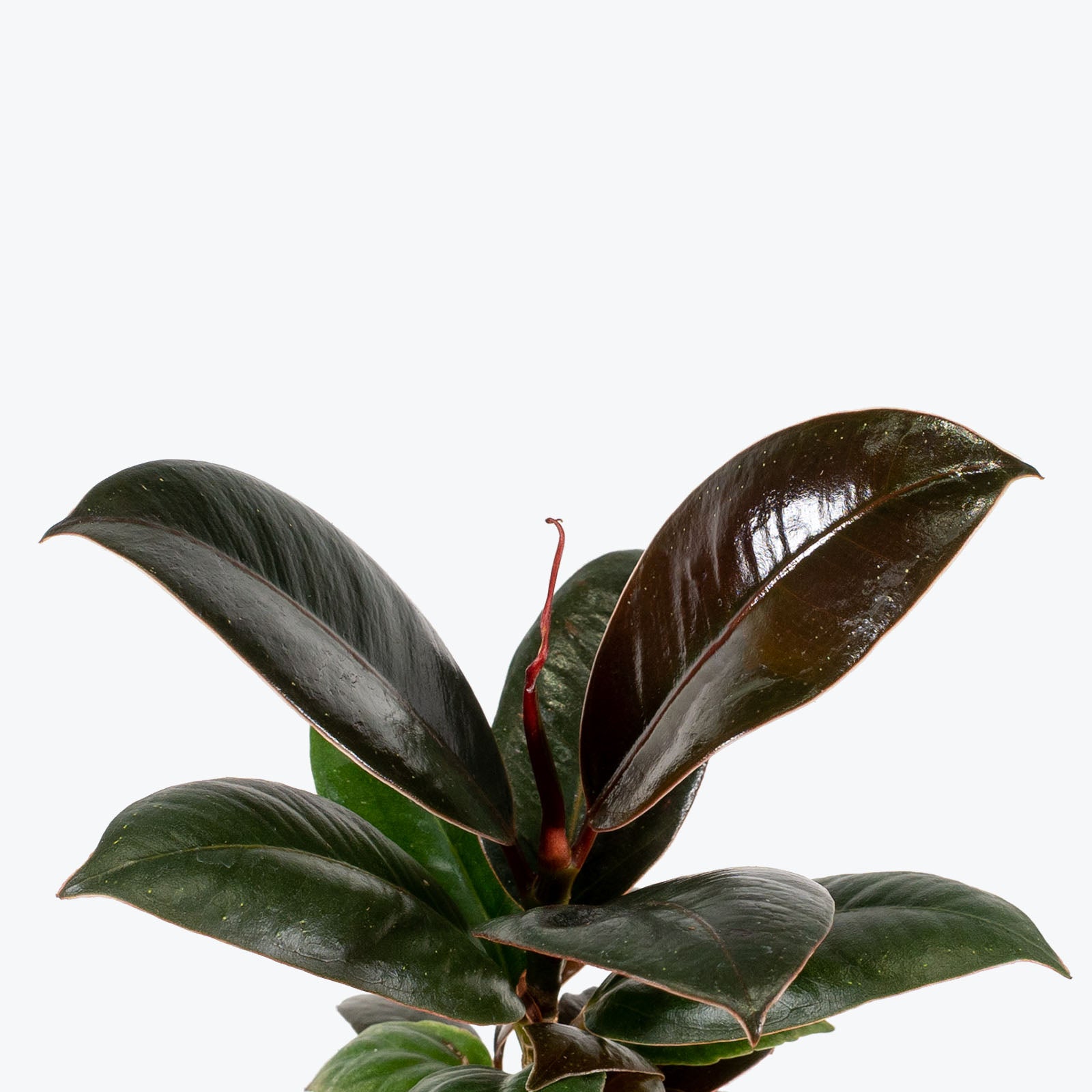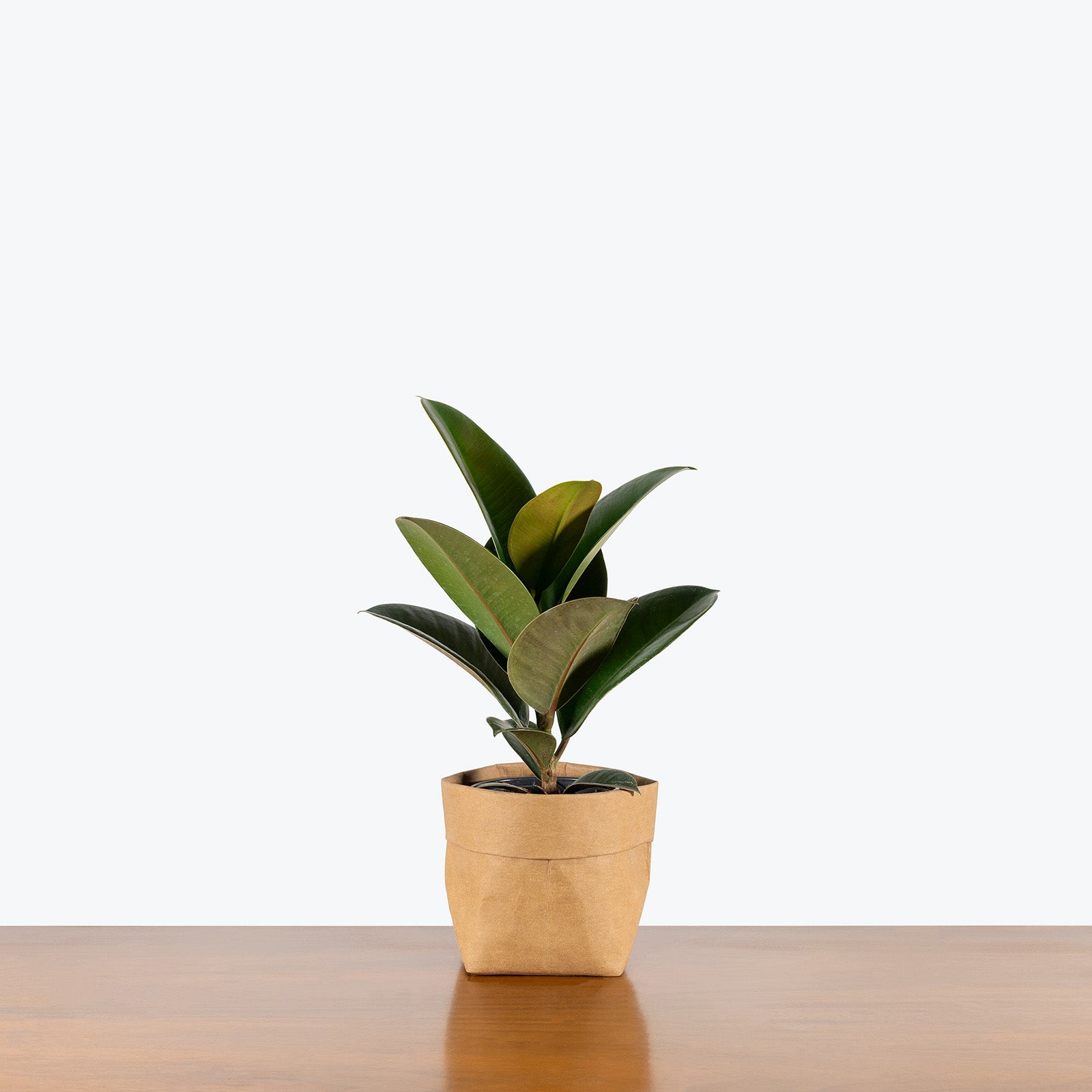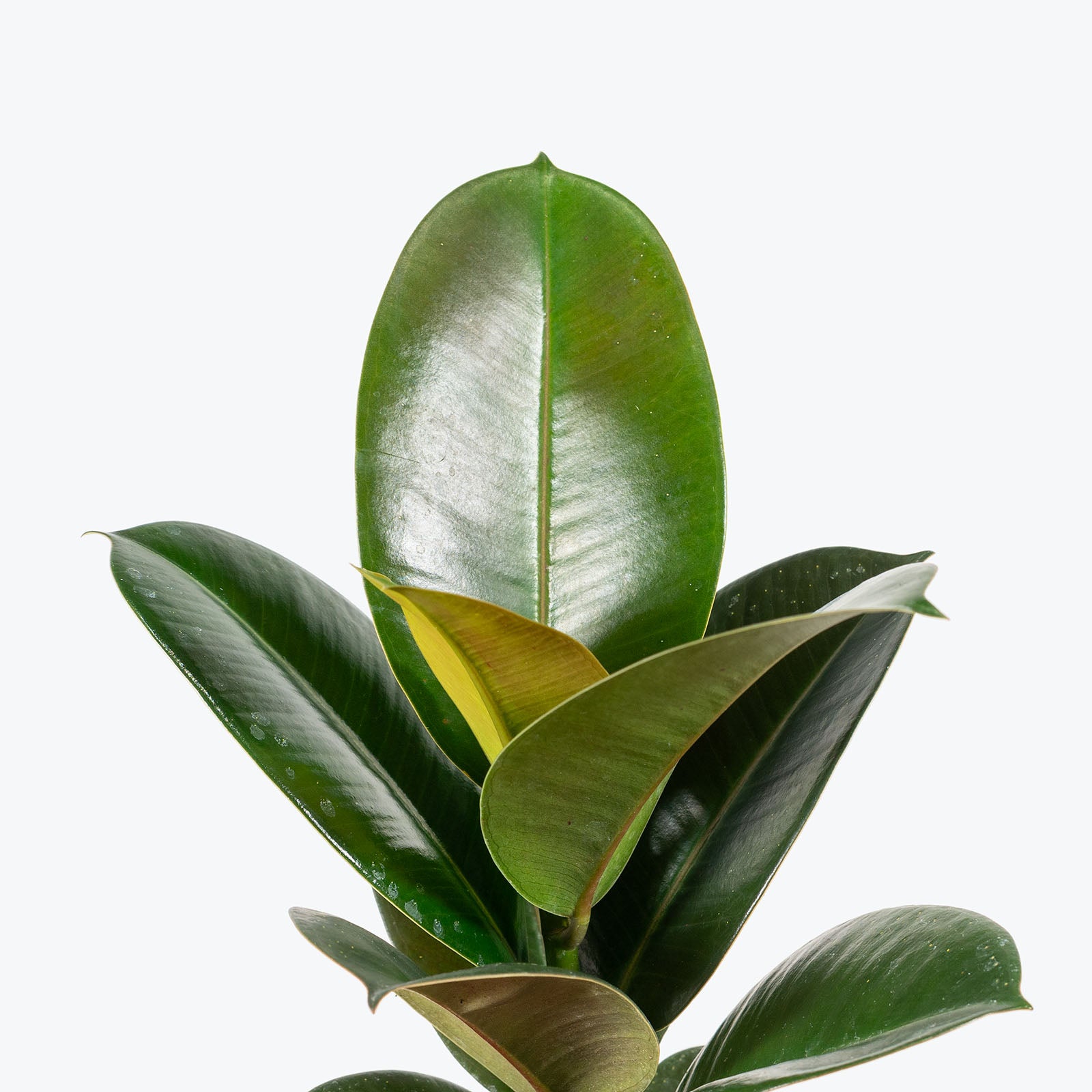

Rubber plants are Ficus elastica, grown for thick, glossy leaves and an upright, tree-like shape. The main differences in this collection are foliage colour, leaf size and growth habit: choose deep green, pink-toned variegation or cream-and-green patterns to suit your space.
Plan for a bright indoor position with room for growth. Smaller pots can start on a table, while larger specimens make floor plants. Melany offers a more compact habit, but even compact varieties grow over time. Compare the listed plant size as well as the cultivar, and give variegated options a reliably bright spot.
What is the difference between Tineke, Ruby and Robusta?
Tineke has green-and-cream variegation, while Ruby Red adds stronger pink and reddish tones. Robusta is a solid-green option with broad, glossy leaves. For a different pattern, Shivereana Moonshine has mottled cream and green foliage. Colour and pattern vary between leaves and individual plants.
Which rubber plant is a good choice for a smaller room?
Consider Melany for its more compact growth, or Sophia for smaller, rounder green leaves. Check the current size of the selected plant and leave room around its foliage. Neither stays the same size forever; a rubber plant may eventually need a floor position and pruning to manage its shape.
Can a rubber plant grow in low light?
Bright, indirect light is a better starting point for healthy growth. Solid-green forms can tolerate a medium-light position, but growth slows as light decreases. Tineke, Ruby and Shivereana need particular attention to light because of their variegated foliage. Avoid a dark corner, cold window drafts and sudden exposure to harsh direct sun.
How often should I water a rubber plant?
Check the potting mix instead of following a fixed weekly schedule. Allow it to dry partly between thorough waterings, use a pot with drainage and empty any water left in the outer pot. It may dry more slowly in winter or lower light. Yellowing or falling leaves can have several causes, including wet roots and cold drafts, so check the conditions before adding more water. Use the selected variety’s product care guide to judge how much of the mix should dry before watering.
Are rubber plants safe for cats and dogs?
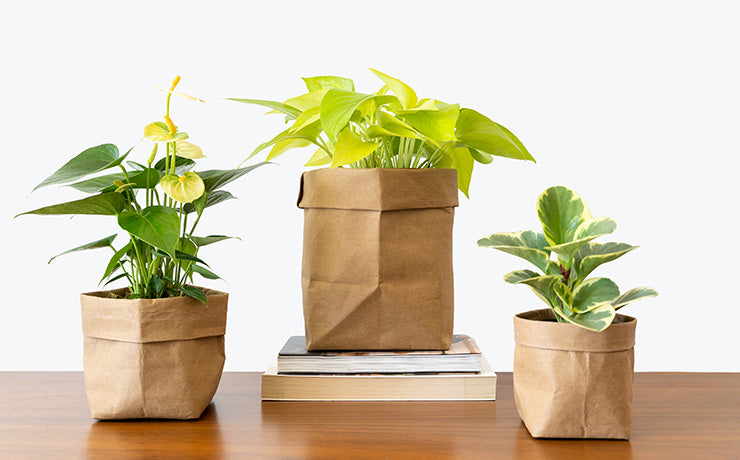
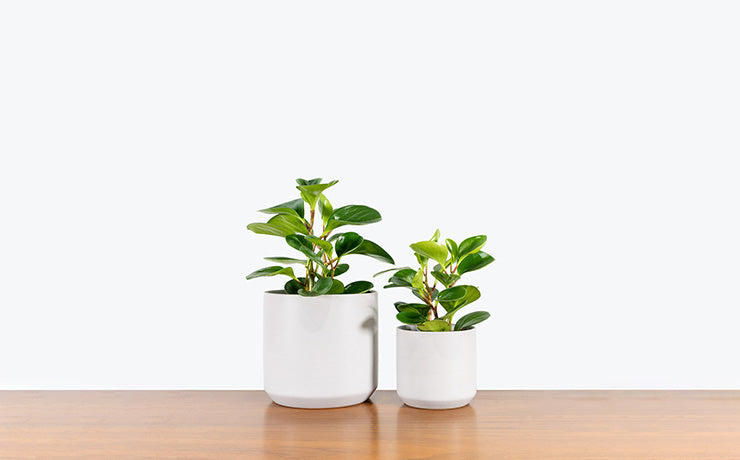
Ficus elastica is not a pet-safe choice: its foliage and milky sap can be harmful if chewed. Keep it away from pets that can reach the leaves, or choose from our pet-friendly plants. The baby rubber plant sold as Peperomia is a different plant, so check the botanical name rather than relying on the common name.
If you’re unhappy with your plants for any reason, contact us within 15 days, we'll sort it out for you. 30 days for accessories.
Lifetime Support
If you have questions about your plant at any point or are just not sure if it is doing something good or bad, our plant experts are always here for you to guide you in the right direction.
Carbon-Neutral Delivery
Get carbon-neutral delivery across Canada, and enjoy free local delivery* to have your plants delivered by one of our friendly team members in Toronto and cities around Toronto.
Packed with Care
Plastic negative, and eco-friendly packaging, we spend every effort to make sure your plants arrive in their best condition with minimal environmental impact.